Description
Rifle Scope Product Details
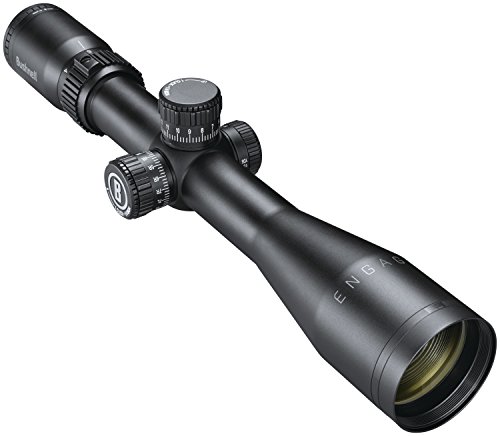
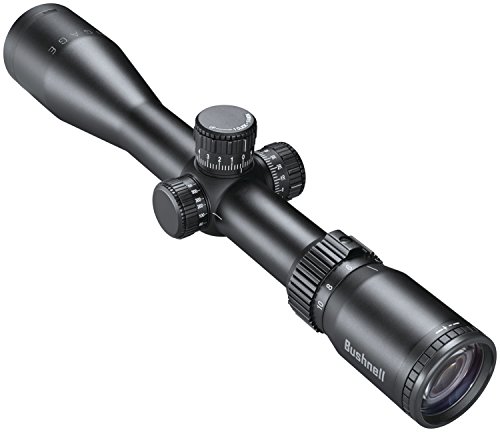
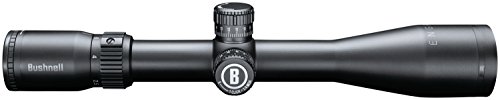
Bushnell Engage Riflescope, Matte Black, 30mm Tube
Rifle Scope Product Features
About this item
Includes flip open objective and Eyepiece covers
A premier protective lens coating to repel water, oil, fog, dust and debris.
Features 1-MOA windage and elevation hashmarks and can reach short and mid-range targets.
Easy parallax adjustments with the side-mounted dial.
A process that ensures fogproof performance in any condition.
Setting won’t budge even with drops and bumps.
No additional tools are needed to lock-in or release turrets.
Waterproof construction ensures flawless performance in any condition.
An anti-reflection coating allowing optimum brightness and true color.
REN21044DG REN31242DG REN41644DG REN62450DG
Magnification Range 2.5 – 10x 3 – 12x 4 – 16x 6 – 24x
Reticle Deploy MOA Deploy MOA Deploy MOA Deploy MOA
Elevation/Windage Travel 50/50 MOA 50/50 MOA 50/50 MOA 50/50 MOA
Click Value .25 MOA .25 MOA .25 MOA .125 MIL
Travel per Revolution 15 MOA 15 MOA 15 MOA 8 MOA
Focus Side Side Side Side
Eye Relief (Maximum Power) 3.6 inches 3.6 inches 3.6 inches 3.6 inches
Field of View @ 100 Yards 45’@2.5x / 11’@10x 30’@3x / 6’@12x 28’@4x / 7’@16x 18’@6x / 4’@24x
Weight 19.3 oz 19.5 oz 20.1 oz 23.7 oz
Length 13.6 inches 14.0 inches 14.0 inches 14.3 inches
Bushnell Engage Riflescopes
The Engage riflescope represents the latest evolution in Bushnell optics. The Deploy MOA reticle features 1-MOA windage and elevation hashmarks, and can reach short and mid-range targets. Dialing in the scope is easy too, with the Tooless Zero Reset Locking Turret. Find out why Bushnell’s clarity and glass are best in class with Engage .
About the Bushnell Manufacturer
Bushnell is a premium maker for firearm scopes, optics, mounts, and other components used for guns like rifles and long guns. They style and manufacture their mounts and related products working with materials which are resilient and long lasting. This includes the Bushnell Engage Riflescope, Matte Black, 30mm Tube by Bushnell. For more shooting products, visit their site.
Facts About Rifle Scopes
Rifle scopes allow you to precisely aim a rifle at various targets by lining up your eye with the target over a distance. They do this through zoom using a series of lenses within the scope. The scope’s positioning can be dialed in to account for various ecological elements like wind and elevation increases to make up for bullet drop.
The scope’s purpose is to help the shooter understand exactly where the bullet will land based upon the sight picture you are viewing via the scope as you line up the scope’s crosshair or reticle with the intended target. Most modern-day rifle scopes and optics have about eleven parts which are arranged inside and on the exterior of the optic. These optic pieces consist of the rifle scope’s body, lenses, modification turrets, focus rings, and other parts. See all eleven parts of optics.
Rifle Glass Types
Rifle scopes can be either “first focal plane” or “second focal plane” type of scopes. Choosing the finest type of rifle glass is based on what type of shooting you plan to do.
About First Focal Plane Scopes
Focal plane scopes (FFP) come with the reticle in front of the magnifying lens. This triggers the reticle to increase in size based upon the level of zoom being used. The benefit is that the reticle measurements are the same at the magnified range as they are at the non amplified distance. One tick on a mil-dot reticle at one hundred yards without “zoom” is still the exact same tick at one hundred yards with 5x “zoom”. These types of scopes are practical for:
- Quick acquisition, far away types of shooting
- Shooting scenarios where calculations are small
- Experienced shooters who recognize their aim point “hold over” plus “lead” correlations for their weapon
- Shooters who don’t mind the reticle is bigger and takes up more visual eyesight area than a SFP reticle
Info on Second Focal Plane Optics
Second focal plane scopes (SFP) include the reticle to the rear of the zoom lens. In the FFP example with the SFP scope, the 5x “zoom” 100 yard tick would be 1/5th of the non “zoom” tick reticle measurement.
- Long distance styles of shooting where shooters have extra time to make ballistic estimations
- Shooting where most of the shots take place within much shorter ranges and proximities
- Shooters who want a clearer optic picture without room used up by the enlarged FFP reticle
Rifle Optic Magnification
The quantity of magnification a scope supplies is figured out by the diameter, density, and curvatures of the lenses inside of the rifle scope. The zoom of the scope is the “power” of the scope.
Fixed Single Power Lens Rifle Scope Facts
A single power rifle optic comes with a zoom number designator like 4×32. This implies the zoom power of the scope is 4x power while the objective lens is 32mm. The magnification of this type of optic can not fluctuate given that it is a fixed power scope.
Info on Adjustable Power Lens Rifle Optics
Variable power rifle scopes can be adjusted between magnification increments. It will note the magnification degree in a format like 2-10×32. These numbers mean the magnification of the scope could be adjusted in between 2x and 10x power. This also incorporates the power levels in-between 2 and 10. The power shift is accomplished by making use of the power ring component of the scope near the back of the scope by the eye bell piece.
Rifle Optic Power and Range Correlation
Here are some recommended scope power settings and the ranges where they can be successfully used. Remember that higher magnification glass will not be as efficient as lower powered optics because excessive magnification can be a negative thing in certain situations. The same idea goes for longer distances where the shooter needs adequate power to see exactly where to best aim the rifle at the target.
Info on Lens Finish
All contemporary rifle optic and scope lenses are coated. Lens coating is an important aspect of a shooting platform when looking at high end rifle optics and scope equipment.
HD Versus ED Rifle Optic Lens Coatings
Some rifle glass makers additionally use “HD” or high-def lense finishings that use different procedures, rare earth compounds, aspects, and polarizations to draw out separate color ranges and viewable target definition through the lens. This HD finish is commonly used with higher density lens glass which decreases light’s chance to refract by means of the lens glass. Some scope vendors use “HD” to refer to “ED” signifying extra-low dispersion glass. ED handles how certain colors are represented on the chromatic spectrum and the chromatic deviance or aberration which is also called color distortion or fringing. Chromatic aberration can be obvious around things with well defined outlines as light hits the object from specific angles.
Rifle Scope Lens Single Covering Versus Multi-Coating
Different scope lenses can also have different coatings applied to them. All lenses usually have at least some type of treatment or finish applied to them prior to being used in a rifle scope or optic assembly. This is since the lens isn’t just a raw piece of glass. It becomes part of the carefully tuned optic. It requires a coating to be applied to it so that the lens will be efficiently usable in numerous kinds of environments, degrees of sunlight (full VS shaded), and other shooting conditions.
This lens treatment can safeguard the lens from scratches while reducing glare and other less advantageous things experienced in the shooting environment while sighting in with the scope. The quality of a single covered lens depends on the scope maker and how much you paid for it.
Some scope makers similarly make it a point to define if their optic lenses are covered or “multi” coated. Being “better” depends on the producer’s lens treatment technology and the quality of products used in constructing the rifle scope.
Hydrophobic Finishing for Glass
Water on a lens does not help with maintaining a clear sight picture through a scope at all. Lots of top of the line and high-end scope companies will coat their lenses with a hydrophilic or hydrophobic finishing.
Rifle Optic Mounting Choices
Mounting solutions for scopes can be found in a couple of choices. There are the basic scope rings which are separately installed to the optic and one-piece mounts which cradle the scope. These different types of mounts also generally can be found in quick release versions which use toss levers which enable rifle shooters to quickly mount and dismount the scopes.
Hex Key Optic Rings
Standard, clamp style mounting scope rings use hex head screws to mount to the flattop design Picatinny scope installation rails on rifles. These types of scope mounts use a couple of different rings to support the optic, and are often made from 7075 T6 billet aluminum which are developed for long distance accuracy shooting. This type of scope install is perfect for rifles which need a long lasting, rock solid mount which will not move no matter how much the scope is moved or abused.
Quick-Release Cantilever Rifle Scope Rings
These kinds of quick-release rifle scope mounts can be used to rapidly remove a scope from a rifle and reattach it to a different rifle. A wide range of scopes can also be switched out if they all use a complementary designed mount. The quick detach mount style is CNC crafted from anodized 6061 T6 aluminum and the mounting levers fasten tightly to a flat top type Picatinny rail. This permits the scope to be sighted in while on the rifle, removed from the rifle, and remounted back on the rifle while keeping the original sighting settings. These types of mounts come in beneficial for rifles which are transferred a lot, to take off the scope glass from the rifle for protection, or for scopes which are adopted in between a number of rifles. An example of this mount type is the 30mm mount designed by Vortex Optics. It normally costs around $250 USD
Rifle Glass Tube Sealing and Gas Purging
Wetness inside your rifle optic can wreck a day on the range and your costly optic by resulting in fogging and making residue inside of the scope tube. The majority of scopes protect against moisture from entering the scope tube with a system of sealing O-rings which are waterproof. Usually, these water resistant optics can be submerged underneath 20 or 30 feet of water before the water pressure can push moisture past the O-rings. This should be ample moisture content avoidance for standard use rifles, unless you intend on taking your rifle aboard watercrafts and are worried about the scope still functioning if it goes overboard and you can still find the firearm.
Scope Gas Purging
Another element of avoiding the buildup of wetness within the rifle optic’s tube is filling the tube with a gas like nitrogen. Because this area is currently occupied by the gas, the scope is less affected by climate alterations and pressure distinctions from the external environment which might potentially enable water vapor to seep in around the seals to fill the void which would otherwise be there. These are good qualities of a good rifle scope to seek out.


