Description
Rifle Scope Product Details
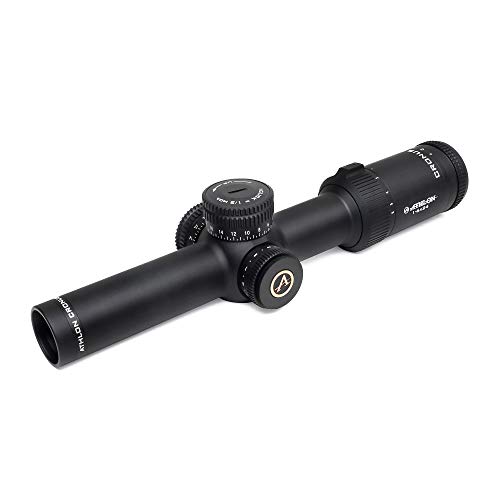
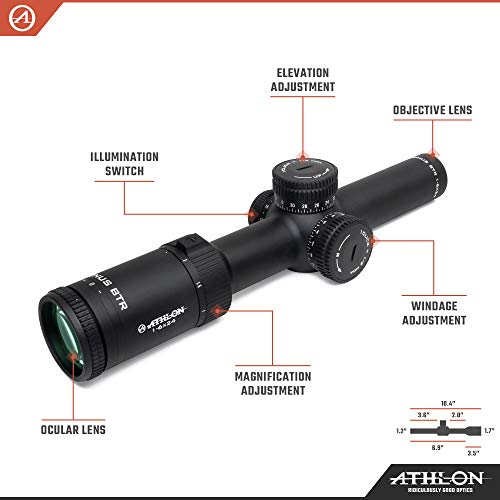
Athlon Optics , Cronus BTR, Riflescope, 1-6×24, Direct Dial, Side Focus, 24mm, ATSR2 SFP IR MOA Reticle,
Rifle Scope Product Features
Illuminated reticle
Etched glass reticle
Advanced fully multicoated
Cronus BTR UHD
Whether you want to engage in precision long-range shooting and tactical applications, or extreme long range hunting adventures, the new Cronus BTR UHD scope is just what the doctor ordered. Loaded with features this scope will not let you down when you need it most. This First Focal Plane scope features ED glass, Advanced Fully Multi-Coated lenses, Argon purged, a true zero stop and much more. When you need the best, the Cronus BTR UHD is the answer!
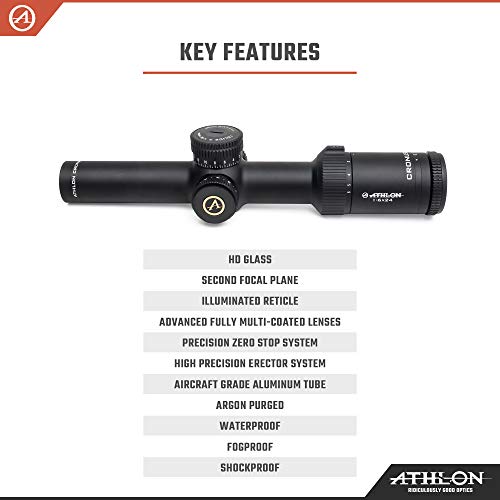
Key Features
UHD Glass
Extra-Low Dispersion glass significantly reduces chromatic aberration giving you an utmost bright and sharp image with true color reproduction.
Advanced Fully Multi-coated
Fully Multi-coated optics effectively reduces reflected light and increases the transmission of light giving you a brighter image than normal single coated lenses
XPL Coating
XPL Coating gives you an extra protection on the exterior lenses from dirt, oil and scratches.
Precision Zero Stop System
Precision Zero Stop System allows you to return to your zero position and dial back to it with a sharp and precise stop right at your zero location.
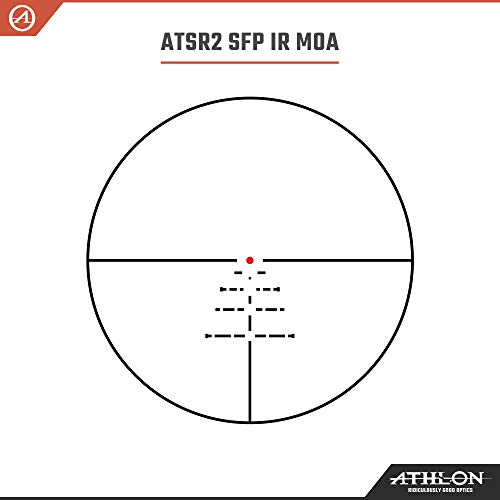
ATSR2 SFP IR MOA
ATSR2 SFP IR MOA designed around the .223/5.56mm using a 69 grain Sierra Match King and a 200 yard zero. The open center design allows shooters to engage 12-18″ targets out to 600 yards by quickly bracketing the target. Subtension holds for 300, 400, 500, and 600 yards are calibrated to compensate for 0, 5, and 10 MPH winds. The 3-post cross hair design quickly draws the shooters attention to the illuminated center dot. Perfect for 3-gun competitions or the hunter looking for short to midrange engagement when seconds matter.
Subtensions in MOA: A1 (0.13); A2 (0.3); A3 (2); B1 (0.6); B2 (1.5); B3 (2); B4 (0.5); C1 (1); C2 (5); C3 (2); D1 (0.2); D2 (0.3).
1-6×24 ATSR2 MOA 4.5-29×56 APRS MIL 4.5-29×56 APLR MOA 4.5-29×56 APRS1 MIL 4.5-29×56 APLR5 MOA 4.5-29×56 APRS MIL
Tube Diameter 30 mm 34 mm 34 mm 34 mm 34 mm 34 mm
Focal Plane Second First First First First First
FoV at 100Y 106.9-17.7 ft 24.8-3.83 ft 24.8-3.83 ft 24.8-3.83 ft 24.8-3.83 ft 24.8-3.83 ft
Eye Relief 3.6-4.0″ 3.6-3.8″ 3.6-3.8″ 3.6-3.8″ 3.6-3.8″ 3.6-3.8″
Turret Style Exposed Exposed Exposed Exposed Exposed Exposed
Length 10.6″ 14.4″ 14.4″ 14.4″ 14.4″ 14.4″
Weight 18.8 oz 35.8 oz 35.8 oz 35.8 oz 35.8 oz 35.8 oz
About the Athlon Optics Manufacturer
Athlon Optics is a premium supplier for firearm scopes, optics, mounting solutions, and other components used for firearms like rifles and long guns. They create and supply their mounts, scopes, and related products using elements which are durable and long lasting. This includes the Athlon Optics , Cronus BTR, Riflescope, 1-6×24, Direct Dial, Side Focus, 24mm, ATSR2 SFP IR MOA Reticle, by Athlon Optics. For additional shooting goods, visit their site.
Rifle Glass Info
Rifle scopes permit you to specifically align a rifle at various targets by lining up your eye with the target over a range. They do this through magnification using a set of lenses within the scope. The scope’s positioning can be adapted for the consideration of different natural aspects like wind and elevation increases to make up for bullet drop.
The scope’s function is to help shooters understand precisely where the bullet will hit based on the sight picture you are seeing using the scope as you align the scope’s crosshair or reticle with the intended target. A lot of modern-day rifle optics have around eleven parts which are found inside and externally on the scope body. These scope parts include the rifle scope’s body, lenses, adjustment dials or turrets, objective focus rings, and other parts. Learn about the eleven parts of rifle glass.
Rifle Optic Styles
Rifle scopes can be either “first focal plane” or “second focal plane” type of scopes. The style of focal plane an optic has determines where the reticle or crosshair lies in regard to the optic’s magnification. It actually suggests the reticle is located behind or before the magnifying lens of the optic. Looking for the most reliable sort of rifle glass depends upon what style of shooting you plan on doing.
First Focal Plane Glass Info
First focal plane glass (FFP) come with the reticle in front of the magnifying lens. This triggers the reticle to increase in size based upon the level of magnification being used. The result is that the reticle measurements are the same at the magnified distance as they are at the non magnified range. For example, one tick on a mil-dot reticle at one hundred yards without having “zoom” is still the exact same tick at one hundred yards using 5x “zoom”. These kinds of scopes work for:
- Quick acquisition, far away kinds of shooting
- Shooting circumstances where computations are marginal
- Experienced shooters who understand their target “hold over” and also “lead” correlations for their long gun
- Shooters who don’t mind the reticle is enlarged and takes up more visual sight room than a SFP reticle
Info About Second Focal Plane Glass
Second focal plane optics (SFP) come with the reticle behind the zoom lens. In the FFP example with the SFP scope, the 5x “zoom” one hundred yard tick reticle measurement would be 1/5th of the non “zoom” tick.
- Long distance kinds of shooting where shooters have additional time to make ballistic estimations
- Shooting where most of the shots happen within shorter ranges and distances
- Shooters who choose a clearer optic picture with less room used up by the larger sized FFP reticle
Optic Magnification
The quantity of scope zoom you need on your glass depends upon the kind of shooting you intend to do. Almost every type of rifle glass gives some amount of zoom. The quantity of magnification a scope supplies is established by the size, density, and curvatures of the lenses inside of the rifle optic. The magnifying level of the optic is the “power” of the glass. This indicates what the shooter is looking at through the scope is amplified times the power element of what can usually be seen by human eyes.
Single Power Lens Rifle Glass Info
A single power rifle optic will have a zoom number designator like 4×32. This means the zoom power of the scope is 4x power and the objective lens is 32mm. The zoom of this type of optic can not fluctuate since it is fixed.
Adjustable Power Lens Rifle Scope Facts
Variable power rifle scopes can be adjusted between magnification levels. These types of scopes will note the magnification amount in a format like 2-10×32. These numbers mean the magnification of the scope can be adjusted in between 2x and 10x power. This also utilizes the power levels in-between 2 and 10. The power shift is accomplished by employing the power ring component of the scope near the back of the scope by the eye bell.
Scope Power and Ranges
Here are some suggested scope powers and the ranges where they could be efficiently used. Highly magnified rifle scope glass will not be as beneficial as lower powered rifle scope glass considering too much magnification can be a bad thing. The same goes for extended ranges where the shooter needs to have sufficient power to see precisely where to best aim the rifle.
Lens Finish for Rifle Glass
All modern-day rifle optic and scope lenses are coated. Lens coating can be a crucial element of a rifle’s setup when thinking about high end rifle optics and scope equipment.
HD Versus ED Lens Coatings
Some glass suppliers additionally use “HD” or high-definition lens finishes which apply various procedures, rare earth compounds, elements, and polarizations to enhance a wide range of color ranges and viewable target visibility through lenses. This high-def finish is commonly used with more costly, high density glass which decreases light’s ability to refract by means of the lens glass. Some scope vendors use “HD” to refer to “ED” meaning extra-low dispersion glass. ED deals with how certain colors are represented on the chroma spectrum and the chromatic aberration or difference which is also called color distortion or fringing. Chromatic aberration may be visible around things with defined outlines as light hits the item from particular angles.
Single Finishing Versus Multi-Coating for Optics
Different scope lenses can also have various coverings applied to them. All lenses generally have at least some kind of treatment or finish applied to them before they are used in a rifle scope or optic. Since the lens isn’t just a raw piece of glass, they require performance enhancing coatings. It becomes part of the finely tuned optic. It must have a coating put on it so that the lens will be optimally functional in lots of types of environments, degrees of sunlight (full VS shaded), and other shooting conditions.
This lens treatment can safeguard the lens from scratches while minimizing glare and other less helpful things experienced in the shooting environment while sighting in with the scope. The quality of a single layered lens depends on the scope manufacturer and how much you paid for it.
Some scope makers also make it a point to define if their optic lenses are layered or “multi” covered. This implies the lens has several treatments applied to them. If a lens gets numerous treatments, it can indicate that a company is taking numerous steps to fight different natural factors like an anti-glare covering, a scratch resistant anti-abrasion finish, followed by a hydrophilic covering. This additionally does not always indicate the multi-coated lens is better than a single coated lens. Being “much better” hinges on the manufacturer’s lens treatment innovation and the quality of glass used in constructing the rifle scope.
Scope Lens Hydrophobic Coating
Water on a lens does not improve maintaining a clear sight picture through an optic whatsoever. Lots of top of the line or high-end optic manufacturers will coat their lenses with a hydrophilic or hydrophobic finishing. The Steiner Optics Nano-Protection is a fine example of this kind of treatment. It treats the surface area of the Steiner optic lens so the water molecules can not bind to it or create surface tension. The result is that the water beads move off of the scope to preserve a clear, water free sight picture.
Rifle Glass Installing Options
Mounting solutions for scopes are available in a few choices. There are the standard scope rings which are individually installed to the optic and one-piece scope mounts which cradle the scope. These different kinds of mounts also normally can be found in quick release versions which use manual levers which allow rifle shooters to quickly install and dismount the glass.
Hex Key Optic Rings
Normal, clamp design mounting scope rings use hex head screws to mount to the flattop style Picatinny scope installation rails on rifles. These types of scope mounts use a couple of different rings to support the optic, and are often made from 7075 T6 billet aluminum which are developed for long range accuracy shooting. This type of scope install is wonderful for rifles which require a resilient, sound mounting solution which will not move no matter how much the scope is moved or abuse the rifle takes.
Quick-Release Cantilever Glass Ring Mounts
These types of quick-release rifle scope mounts can be used to quickly attach and remove a scope from a rifle. A wide range of scopes can also be switched out if they all use a complementary style mount. The quick detach design is CNC crafted from anodized 6061 T6 aluminum and the mounting levers attach solidly to a flat top style Picatinny rail. This enables the scope to be sighted in while on the rifle, taken off of the rifle, and remounted back on the rifle while maintaining accuracy. These types of mounts are useful and beneficial for shooting platforms which are carried a lot, to remove the scope glass from the rifle for protection, or for optics which are chosen for use between a number of rifles. An example of this mount type is the 30mm mount from Vortex Optics. It normally costs around $250 USD
Sealing and Gas Purging for Glass Tubes
Moisture inside your rifle scope can destroy a day of shooting and your pricey optic by triggering fogging and producing residue inside of the scope tube. The majority of scopes prevent moisture from getting in the scope tube with a system of sealing O-rings which are water resistant.
Gas Purged Optic Tubes
Another element of avoiding the buildup of moisture inside of the rifle optic’s tube is filling the tube with a gas like nitrogen. Because this area is already occupied by the gas, the glass is less affected by temp shifts and pressure differences from the outdoor environment which could possibly allow water vapor to permeate in around the seals to fill the void which would otherwise exist. These are good qualities of a good rifle scope to seek out.


