Description
Rifle Scope Product Details
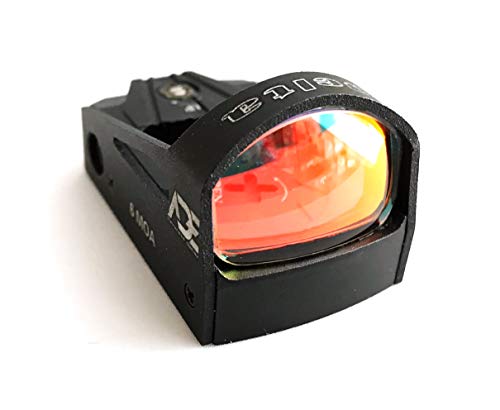
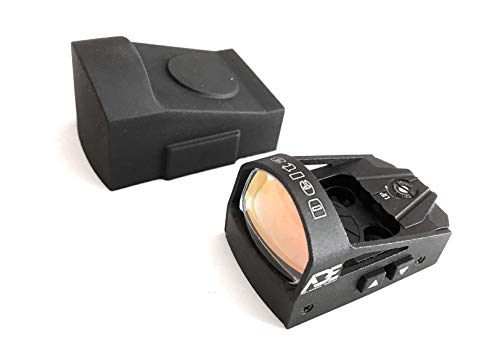
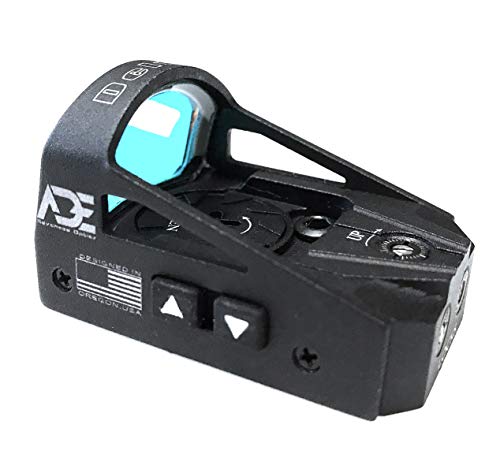
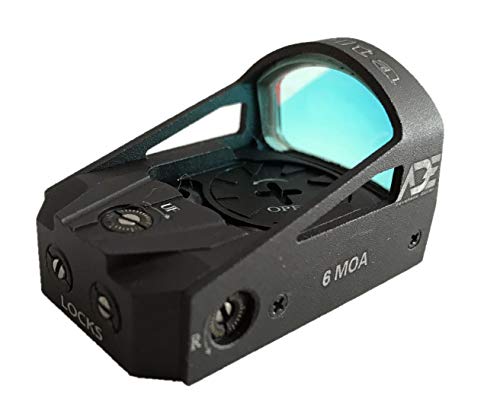
Ade Advanced Optics rd3-012-2 Rd3-012-5 Red Dot Micro Mini Reflex Sight
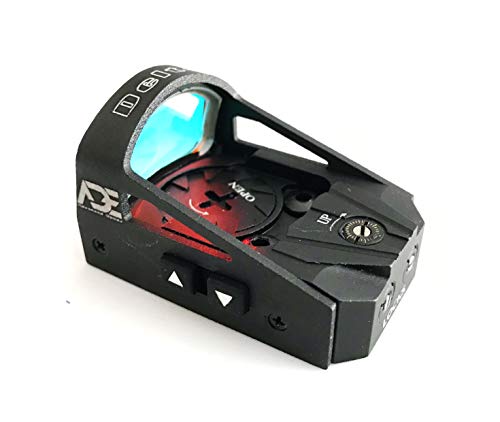
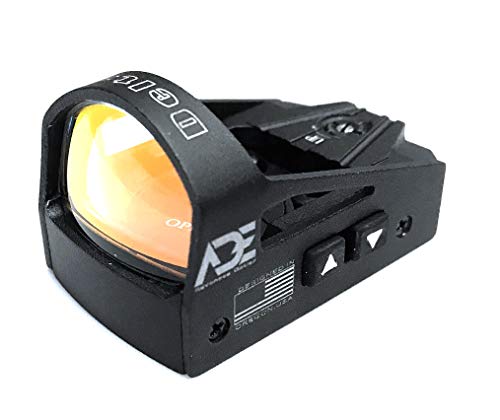
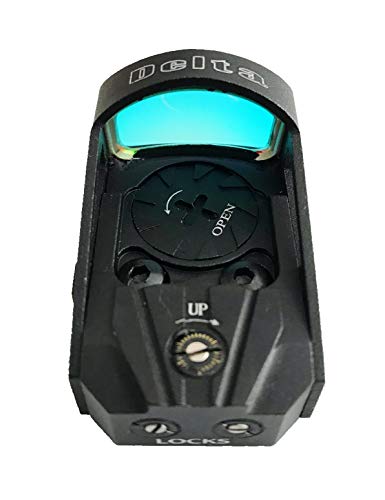
The 2019 Delta Red dot sight-6 MOA promotes rapid target acquisition while providing a precise point of aim; getting shots down range and on target fast. The aluminum housing ensures this unit will stand up to whatever you throw at it. Top load system, no need to remove the sight to change the battery. Can also be used with a long range rifle scope for that perfect backup system. The lowest setting is invisible by human eye that is for using with a night vision. Ade Advanced Optics first made its appearance in the firearms accessory industry by doing private label production for several Major manufacturers and retailers. During this period, Ade Advanced Optics began receiving requests from numerous customers for access to the affordable, high quality products that Ade Advanced Optics was capable of producing. By soliciting feedback from both clients and end users, Ade Advanced Optics was able to overcome the challenges a new company often faces when entering a global market and industry, especially one as competitive as the shooting, hunting, and outdoors industry.
Rifle Scope Product Features
Promotes rapid target acquisition while providing a precise point of aim; getting shots down range and on target fast. Top load System, no need to Remove the sight to change the Battery
The red dot is compatible with Ade handgun mounts for Glock Barreta HK UPS SW MP SIG P226 Springfield Ruger LC9 LC9s LC380 SR9 SR22 SR40 SR45
Red dot has multi brightness level with one adjustment button. Every time you turn on the dot it stays the same brightness level last time it was turned off
1.75″ length x1.25″ width x1.15″ height. Shockproof, Fogproof and waterproof for 30 minutes under 4ft water.Feature 1 M.O.A wind age and elevation adjustments with audible click
6 MOA dot. Come with Protected Cover, Adjustment wrench, Adjustment dailing plate, User Manual and Picatinny mounting plate. Additional mounting plates for hunguns sells separately
About the Ade Advanced Optics Manufacturer
Ade Advanced Optics is a premium manufacturer for weapon scopes, optics, mounts, and other add-ons used for firearms like rifles and long guns. They design and make their scopes, mounts, and related products choosing elements which are durable and long lasting. This includes the Ade Advanced Optics rd3-012-2 Rd3-012-5 Red Dot Micro Mini Reflex Sight by Ade Advanced Optics. For additional shooting items, visit their site.
Info About Rifle Optics
Rifle scopes permit you to specifically align a rifle at different targets by aligning your eye with the target over a range. They accomplish this through magnification by utilizing a set of lenses inside the scope. The scope’s alignment can be adapted to take into account varied environmental factors like wind and elevation to make up for bullet drop.
The scope’s function is to help the shooter understand precisely where the bullet will hit based on the sight picture you are viewing with the optic as you line up the scope’s crosshair or reticle with the intended target. A lot of modern rifle scopes and optics have about eleven parts which are located within and outside of the scope. These parts consist of the rifle scope’s body, lenses, windage and elevation turrets, objective focus rings, and other parts. Learn about the eleven parts of rifle scopes.
Rifle Optic Styles
Rifle scopes can be either “first focal plane” or “second focal plane” type of scopes. Selecting the finest type of rifle optic is based around what type of shooting you plan to do.
About First Focal Plane Glass
First focal plane optics (FFP) include the reticle ahead of the magnifying lens. This triggers the reticle to increase in size based upon the extent of magnification being used. The outcome is that the reticle measurements are the same at the magnified range as they are at the non amplified distance. For example, one tick on a mil-dot reticle at one hundred yards without any “zoom” is still the exact same tick at one hundred yards with 5x “zoom”. These types of scopes are useful for:
- Quick acquisition, long distance types of shooting
- Shooting circumstances where estimations are very little
- Experienced shooters who have an idea for their aim point “hold over” as well as “lead” correlations for their rifles
- Shooters who do not mind the reticle is bigger and requires more visual sight room than a SFP reticle
About Second Focal Plane Optics
Second focal plane scopes (SFP) come with the reticle behind the zoom lens. In the FFP example with the SFP scope, the 5x “zoom” one hundred yard tick would be 1/5th of the non “zoom” tick.
- Far away forms of shooting where shooters have additional time to make ballistic calculations
- Shooting where most of the shots occur within much shorter distances and ranges
- Shooters who like a clearer optic picture without space taken up by the enlarged FFP reticle
Magnification for Rifle Optics
The amount of scope zoom you need on your glass depends on the kind of shooting you wish to do. Pretty much every style of rifle optic offers some degree of zoom. The quantity of zoom a scope delivers is determined by the diameter, thickness, and curves of the lens glass within the rifle optic. The magnification level of the optic is the “power” of the scope. This suggests what the shooter is looking at through the scope is amplified times the power aspect of what can generally be seen by human eyes.
Single Power Lens Scope Info
A single power rifle optic or scope will have a zoom number designator like 4×32. This suggests the zoom power of the scope is 4x power and the objective lens is 32mm. The zoom of this type of scope can not adjust because it is a fixed power optic.
Variable Power Lens Glass
Variable power rifle scopes can be changed between magnification power levels. These types of scopes will list the magnification level in a configuration such as 2-10×32. These numbers indicate the zoom of the scope could be changed between 2x and 10x power. This always involves the powers in-between 2 and 10. The power adaptation is achieved by operating the power ring component of the scope near the rear of the scope by the eye bell.
Power Levels and Range
Here are some recommended scope power levels and the ranges where they may be efficiently used. Always remember that higher magnification optics will not be as efficient as lower powered optics due to the fact that too much zoom can be a negative thing in certain situations. The same idea applies to longer ranges where the shooter needs adequate power to see exactly where to properly aim the rifle at the target.
About Lens Finish
All modern-day rifle optic and scope lenses are coated. There are various types and qualities of coverings. When thinking about high end rifle optics and scope systems, Lens finish can be a vital element of a rifle. The lenses are one of the most critical pieces of the optic since they are what your eye sees through while sighting a rifle in on the target. The covering on the lenses shields the lens surface and even improves anti glare capabilities from refracted light and color exposure.
About Lens Coatings – HD Versus ED
Some scope producers also use “HD” or high-definition lens finishings which use different procedures, polarizations, chemicals, and elements to draw out a wide range of colors and viewable definition through the lens. Some scope producers use “HD” to refer to “ED” indicating extra-low dispersion glass.
Optic Lens Single Finish Versus Multi-Coating
Different optic lenses can likewise have different finishes applied to them. All lenses normally have at least some type of treatment or finish used to them prior to being used in a rifle scope or optic.
This lens treatment can offer protection to the lens from scratches while lowering glare and other less useful things experienced in the shooting environment while sighting in with the scope. The quality of a single coated lens depends on the scope maker and how much you paid for it.
Some scope manufacturers also make it a point to specify if their optic lenses are covered or “multi” coated. Being “better” depends on the manufacturer’s lens treatment technology and the quality of materials used in building the rifle scope.
Glass Lens Hydrophobic Covering
Water on a lens does not help with preserving a clear sight picture through a scope at all. Numerous top of the line and high-end optic makers will coat their lenses with a hydrophobic or hydrophilic finish which is water repellent.
Glass Installing Options
Installing approaches for scopes can be found in a couple of choices. There are the standard scope rings which are separately installed to the optic and one-piece mounts which cradle the scope. These various kinds of mounts also usually are made in quick release versions which use toss levers which permit rifle shooters to rapidly install and dismount the scope.
Hex Key Rifle Optic Rings
Standard, clamp-on type mounting scope rings use hex head screws to fix to the flattop design Picatinny scope mounting rails on the tops of rifles. These styles of scope mounts use two detached rings to support the scope, and are normally constructed from 7075 T6 billet aluminum or similar materials which are made for long distance accuracy shooting. This type of scope mount is ideal for rifle systems which require a long lasting, hard use mount which will not move no matter how much the scope is moved about or jarring the rifle takes. These are the design of mounts you should get for a devoted optics setup on a far away scouting or interdiction firearm that will almost never need to be modified or recalibrated. Blue 242 Loctite threadlocker can also be used to stop the hex screw threads from backing out after they are mounted firmly in place. An example of these mounting rings are the 30mm style made by the Vortex Optics company. The set normally costs around $200 USD
Quick-Release Cantilever Rifle Glass Rings
These types of quick-release rifle scope mounts can be used to rapidly take off a scope from a rifle and reattach it to a different rifle. If they all use a comparable style mount, a number of scopes can often be swapped out on the range. The quick detach design is CNC crafted from anodized 6061 T6 aluminum and the mounting levers attach nicely to a flat top design Picatinny rail. This enables the scope to be sighted in while on the rifle, taken off of the rifle, and remounted while maintaining the original sighting settings. These kinds of mounts are useful and handy for shooting platforms which are transferred a lot, to take off the scope glass from the rifle for protection, or for sight systems which are chosen for use between multiple rifles. An example of this mount style is the 30mm mount from Vortex Optics. It normally costs around $250 USD
Sealing and Gas Purging for Rifle Optic Tubes
Moisture inside your rifle scope can wreck a day on the range and your expensive optic by inducing fogging and making residue inside of the scope’s tube. Most scopes prevent humidity from going into the scope tube with a series of sealing O-rings which are waterproof. Usually, these water resistant optics can be submerged under 20 or 30 feet of water before the water pressure can force moisture past the O-rings. This should be plenty of humidity avoidance for common use rifles, unless you intend on taking your rifle aboard watercrafts and are concerned about the scope still performing if it goes over the side and you can still retrieve the firearm.
What to Know About Glass Tube Gas Purging
Another element of avoiding the accumulation of moisture within the rifle scope’s tube is filling the tube with a gas like nitrogen. Considering that this space is already taken up by the gas, the scope is less affected by condition changes and pressure distinctions from the outside environment which might potentially allow water vapor to leak in around the seals to fill the vacuum which would otherwise be there. These are good qualities of a good rifle scope to seek out.


