
Description
Rifle Scope Product Details
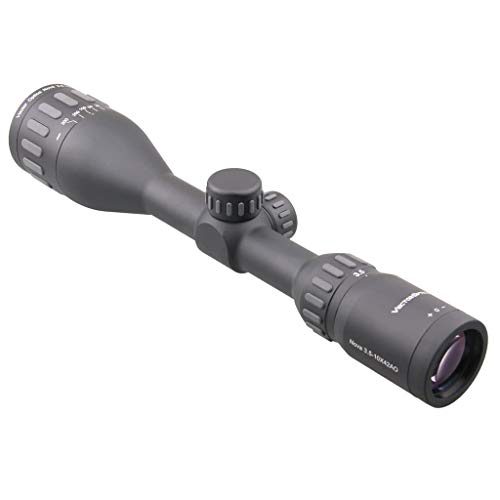
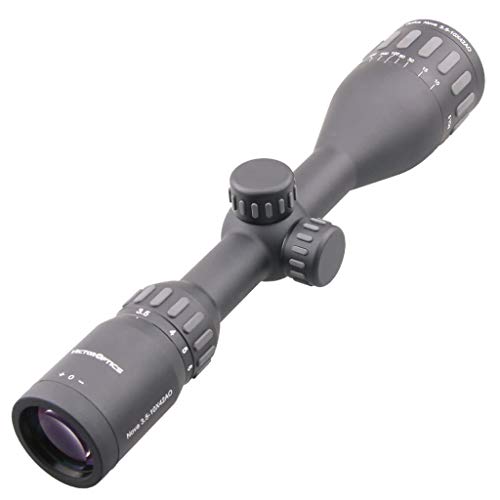
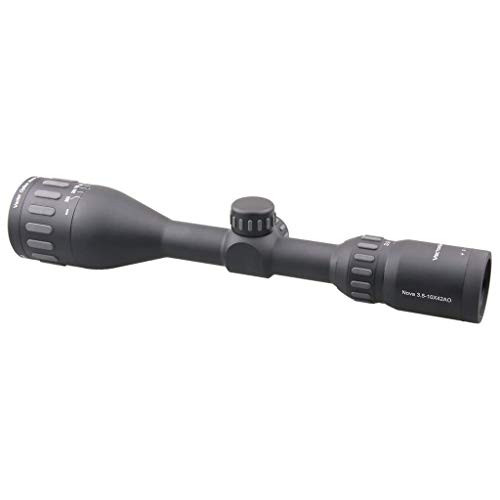
Vector Optics Nova 3.5-10x42mm, 1/4 MOA, 25.4 mm Tube, Second Focal Plane (SFP) Riflescope
Specifications:
Magnification: 3.5-10x
Objective Lens Dia.:42mm(1.7 inch)
Tube Dia.:25.4mm(1 inch)
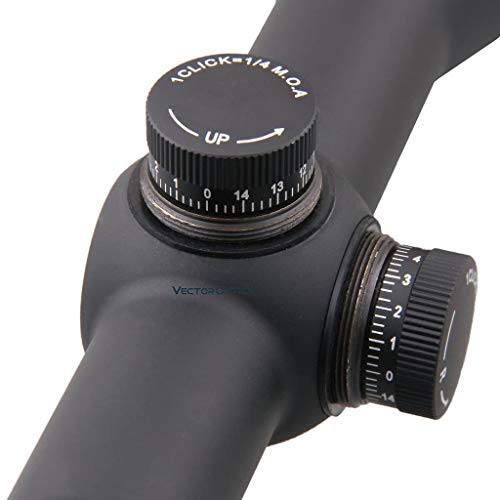
Adjustment Click Value: 1/4 MOA
Reticle: MPC1 range
Ocular Dia: 39mm(1.5 inch)
Ocular Length: 58mm(2.3 inch)
Field of View: 31.44-11.52 feet @ 100 yards
Eye Relief: 80-75mm (3.1-3.0 inch)
Exit Pupil: 12-4.2mm(0.2-0.5 inch)
Elevation Range: 50 MOA
Windage Range: 50 MOA
Lens Coating: Fully multicoated
Length: 320mm (12.6 inch)
Weight: 570g (20.1 OZ)
Finish: Matte
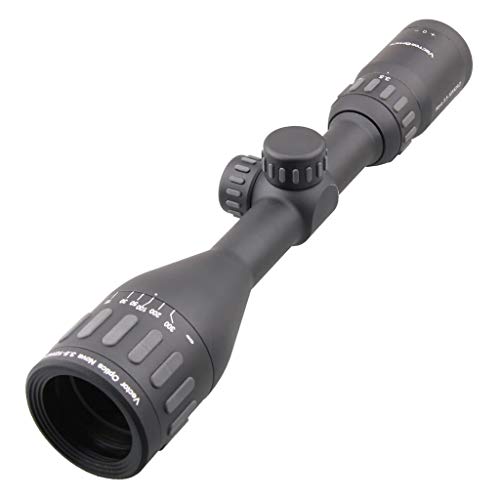
Objective lens parallax correction: 5, 10, 15, 30, 50, 100, 200, 300 and infinite
Diopter compensation from fast-focus eyepiece
Features:
5 Years Warranty
25.4mm Monotube. 1/4 MOA windage and elevation adjustments for fine-tuning accuracy.
Fast-focus Eyepiece for quick and easy reticle focusing
O-ring Sealed and Nitrogen Purged Ensure Water Resistance and Fog Proof performance; Shockproof to 1000g.
High quality 6061 T6 aircraft grade aluminum alloy with durable black matte finish.
Objective Lens Parallax Correction
Package Includes:
– 1 x 3.5-10×42 Riflescope
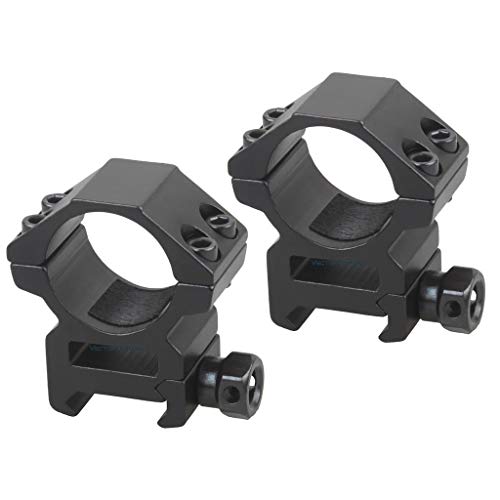
– 2 x 25.4mm weaver mount ring (default) or dovetail mount ring (on request only)
– 1 x Lens Cover
– 1 x Cleaning cloth
Note: We offer 5 years WARRANTY for our products. Please feel free to contact us if you have any interests or product issues, we are available 24/7 online.
Rifle Scope Product Features
5 years warranty.
1/4 MOA windage and elevation adjustments for fine-tuning accuracy.
Optics hold zero. Objective Lens Parallax Correction.
O-ring Sealed and Nitrogen Purged Ensure Water Resistance and Fog Proof performance. Shockproof up to 1000g.
Two 25.4mm scope mount rings can be easily mounted onto any 20mm Picatinny or Weaver mount rails.
About the Vector Optics Company
Vector Optics is a premium supplier for rifle scopes, optics, mounting solutions, and other components used for guns like rifles and long guns. They innovate and manufacture their products making the most of materials which are durable and long lasting. This includes the Vector Optics Nova 3.5-10x42mm, 1/4 MOA, 25.4 mm Tube, Second Focal Plane (SFP) Riflescope by Vector Optics. For additional shooting goods, visit their site.
What You Need to Know About Rifle Optics
Rifle scopes enable you to exactly align a rifle at different targets by lining up your eye with the target over a range. They accomplish this through magnification by making use of a series of lenses inside the scope. The scope’s alignment can be dialed in to account for many natural factors like wind and elevation decreases to make up for bullet drop.
The scope’s purpose is to help shooters understand exactly where the bullet will hit based on the sight picture you are seeing with the scope as you align the scope’s crosshair or reticle with the target. A lot of modern-day rifle scopes and optics have around 11 parts which are found internally and on the exterior of the optic. These parts consist of the rifle scope’s body, lenses, windage and elevation dials or turrets, focus rings, and other parts. See all eleven parts of an optic.
Rifle Optic Types
Rifle scopes can be either “first focal plane” or “second focal plane” type of optics. Deciding on the optimal type of rifle glass is based on what type of shooting you plan to do.
About First Focal Plane Optics
First focal plane scopes (FFP) feature the reticle before the magnification lens. This triggers the reticle to increase in size based upon the amount of zoom being used. The benefit is that the reticle measurements are the same at the enhanced range as they are at the non amplified distance. As an example, one tick on a mil-dot reticle at one hundred yards with no “zoom” is still the same tick at one hundred yards using 5x “zoom”. These kinds of scopes work for:
- Quick acquisition, long distance types of shooting
- Shooting circumstances where estimations are minimal
- Experienced shooters who recognize their aim point “hold over” plus “lead” equations for their long gun
- Shooters who do not mind the reticle is bigger and requires more visual eyesight room than a SFP reticle
About Second Focal Plane Glass
Second focal plane scopes (SFP) come with the reticle behind the magnification lens. This induces the reticle to remain at the exact same overall size in relation to the quantity of magnification being used. The effect is that the reticle measurements adapt based on the zoom chosen to shoot over longer ranges considering that the markings represent distinct increments which can vary with the magnification. In the FFP illustration with the SFP glass, the 5x “zoom” one hundred yard tick would be 1/5th of the non “zoom” tick reticle measurement. These styles of glass work for:
- Long distance kinds of shooting where shooters have extra time to make ballistic computations
- Shooting where most of the shots happen within shorter distances and ranges
- Shooters who would like a clearer optic sight picture with less area used up by the bigger FFP reticle
Scope Zoom
The amount of magnification a scope offers is determined by the diameter, density, and curvatures of the lenses inside of the rifle scope. The zoom of the scope is the “power” of the scope.
Info About Single Power Lens Rifle Optics
A single power rifle scope uses a magnification number designator like 4×32. This implies the magnification power of the scope is 4x power while the objective lens is 32mm. The magnification of this kind of optic can not fluctuate because it is set from the factory.
Info on Variable Power Lens Scopes
Variable power rifle scopes use variable power levels. The power adjustment is accomplished by making use of the power ring part of the scope near the back of the scope by the eye bell.
Rifle Scope Power and Ranges
Here are some recommended scope power settings and the distances where they may be successfully used. Keep in mind that higher power glass will not be as efficient as lower powered optics and scopes since excessive magnification can be a bad thing. The same concept goes for extended distances where the shooter needs to have enough power to see precisely where to best aim the rifle at the target.
About Lens Finish
All contemporary rifle optic and scope lenses are layered. Lens coating can be a vital aspect of a rifle system when purchasing high end rifle optics and scope setups.
HD Versus ED Lenses
Some scope manufacturers also use “HD” or high-definition lens coatings which use various procedures, chemicals, polarizations, and elements to draw out separate colors and viewable definition through the lens. Some scope producers use “HD” to refer to “ED” implying extra-low dispersion glass.
Details on Single Coating Versus Multi-Coating
Various optic lenses can likewise have different coverings used to them. All lenses usually have at least some type of treatment or coating applied to them prior to being used in a rifle scope or optic.
This lens treatment can safeguard the lens from scratches while minimizing glare and other less advantageous things experienced in the shooting environment while sighting in with the scope. The quality of a single layered lens depends on the scope maker and how much you paid for it.
Some scope manufacturers similarly make it a point to specify if their optic lenses are layered or “multi” covered. Being “much better” depends on the manufacturer’s lens treatment technology and the quality of materials used in building the rifle scope.
Details on Anti-water Covering
Water on a lens does not help with preserving a clear sight picture through a scope at all. Lots of top of the line and military grade optic makers will coat their lenses with a hydrophobic or hydrophilic finishing which is water repellent.
Rifle Optic Installing Choices
Installing approaches for scopes can be found in a few options. There are the basic scope rings which are separately installed to the optic and one-piece mounts which cradle the scope. These various kinds of mounts also normally are made in quick release variations which use throw levers which enable rifle operators to rapidly mount and dismount the scope.
Glass Mounting Solutions with Hex Key Rings
Basic, clamp design mounting scope rings use hex head screws to fix to the flattop design Picatinny scope mount rails on rifles. These kinds of scope mounts use double individual rings to support the scope, and are usually constructed from 7075 T6 billet aluminum which are made for far away precision shooting. This kind of scope mount is good for rifle systems which need to have a long lasting, rock solid mount which will not change despite just how much the scope is moved or abuse the rifle takes. These are the design of mounts you should have for a dedicated scope system on a far away scouting or interdiction long gun that will pretty much never need to be changed or recalibrated. Blue 242 Loctite threadlocker can additionally be used on the mount’s screws to stop the hex screws from backing out after they are mounted firmly in position. An example of these rings are the 30mm style made by the Vortex Optics company. The set typically costs around $200 USD
Quick-Release Cantilever Scope Ring Mounting Solutions
These types of quick-release rifle scope mounts can be used to rapidly attach and detach a scope from a rifle. If they all use a comparable style mount, a number of scopes can often be swapped out. The quick detach design is CNC crafted from anodized 6061 T6 aluminum and the mounting levers fasten solidly to a flat top design Picatinny rail. This allows the scope to be sighted in while on the rifle, taken off of the rifle, and remounted back on the rifle while retaining accuracy. These kinds of mounts come in beneficial for rifles which are transferred a lot, to remove the scope glass from the rifle for protection, or for optics which are employed between multiple rifles. An example of this mount type is the 30mm mount from the Vortex Optics manufacturer. It normally costs around $250 USD
What to Know About Rifle Optic Tube Sealing and Gas Purging
Wetness inside your rifle scope can ruin a day of shooting and your pricey optic by triggering fogging and creating residue inside of the scope tube. A lot of scopes prevent wetness from going into the scope tube with a system of sealing O-rings which are water resistant.
Details on Rifle Scope Tube Gas Purging
Another element of avoiding the accumulation of moisture within the rifle scope’s tube is filling the tube with a gas like nitrogen. Given that this area is currently occupied by the gas, the optic is less influenced by climate changes and pressure distinctions from the external environment which may potentially enable water vapor to seep in around the seals to fill the vacuum which would otherwise be there. These are good qualities of a decent rifle scope to look for.


