

Description
Rifle Scope Product Details
Vortex Optics Crossfire II 3-12×56 Adjustable Objective Hog Hunter, Second Focal Plane, 30mm Tube Riflescope – V-Brite Illuminated Reticle
Crossfire II 3-12×56 AO hog Hunter riflescope our mission-specific Crossfire II hog Hunter riflescope excels when hunting in the lowest light, from early evening to the first glimmer of dawn. Thanks to fully multi-coated optics with anti-reflective coatings, a 30 mm tube and oversized 56 mm objective lens, hard-core hog hunters can now place shots in heavy cover with the utmost confidence when light conditions are at their worst. The hard anodized single-piece aircraft-grade aluminum tube is Nitrogen Purged and O-ring sealed for waterproof/fog proof performance. With versatile 3-12x magnification and a rugged build to withstand hard use, The hog Hunter is one tough customer.
Rifle Scope Product Features
About this item
The 3-12×56 Adjustable Objective Hog Hunter Crossfire II riflescope excels when hunting in the lowest light. The V-Brite reticle and over-sized objective allow hunters to take shots from heavy cover with the utmost confidence in tough light conditions .
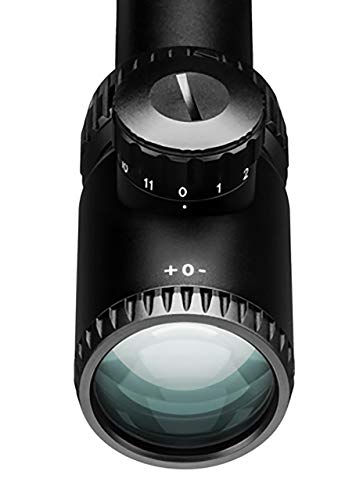
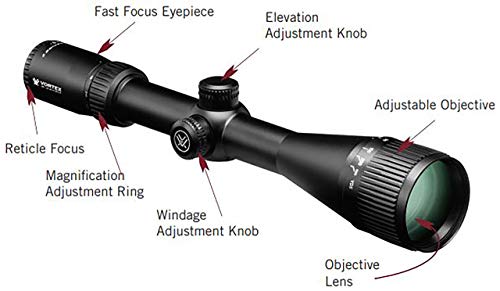
The adjustable objective provides image focus and parallax removal to the shooter while anti-reflective, fully multi-coated lenses provide bright and clear views.
With long eye relief and an ultra-forgiving eye box, you’ll be able to quickly get a sight picture and acquire your target. The fast focus eyepiece allows quick and easy reticle focusing.
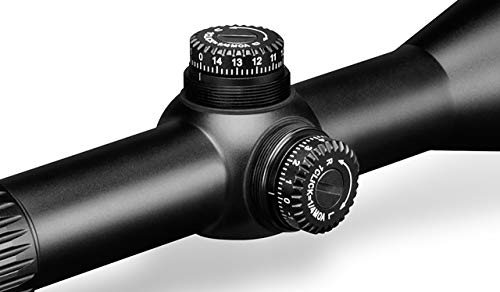
Capped reset turrets are finger adjustable with MOA clicks that can be reset to zero after sighting in.
A single piece tube constructed from aircraft grade aluminum ensures strength and shockproof performance. O-ring sealed and nitrogen purged, the Crossfire II delivers waterproof and fogproof performance.
Crossfire II 3-12X56 AO Hog Hunter Riflescope (CF2-31049)
Specifically designed for discriminating hunters and shooters, the Crossfire II series of riflescopes offer the highest levels of performance and reliability. Our mission-specific Crossfire II Hog Hunter riflescope excels when hunting in the lowest light, from early evening to the first glimmer of dawn.
Thanks to fully multi-coated optics with anti-reflective coatings, a 30 mm tube and over-sized 56 mm objective lens, hard-core hog hunters can now place shots in heavy cover with the utmost confidence when light conditions are at their worst. The hard anodized single-piece aircraft-grade aluminum tube is nitrogen purged and o-ring sealed for waterproof and fogproof performance.
With versatile 3-12x magnification and a rugged build to withstand hard use, the Hog Hunter is one tough customer. Dual use for Shooting Tactical/Hunting.
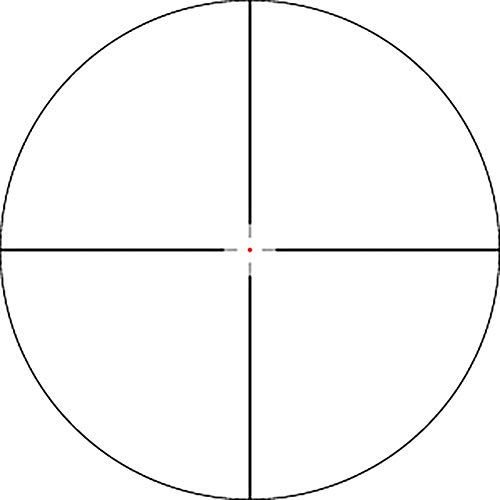
V-Brite Illuminated MOA Reticle
Uses the V-Plex format along with battery-powered electronics to illuminate the center dot for better low-light performance. Good for hunters/shooters during extra-low light conditions.
Illuminated center dot provides a precise aiming point under low-light conditions.
Second focal plane (SFP) reticles are located near the scope’s eyepiece behind the image erecting and magnifying lenses. This style of reticle does not visually change in size when you change the magnification. The advantage of an SFP reticle is that it always maintains the same appearance. Listed reticle subtensions used for estimating range, holdover, and wind drift correction are only accurate at one particular magnification.
CF2-31039 CF2-31045 CF2-31049
Model 4-16×50 AO 6-24×50 AO 3-12×56 AO Hog Hunter
Reticle Dead-Hold BDC Dead-Hold BDC V-Brite
Adjustment Graduation 1/4 MOA 1/4 MOA 1/4 MOA
Travel per Rotation 15 MOA 15 MOA 15 MOA
Max Elevation Adjustment 50 MOA 40 MOA 60 MOA
Max Windage Adjustment 50 MOA 40 MOA 60 MOA
Parallax Setting 25 yards to infinity 10 yards to infinity 10 yards to infinity
About the Vortex Scope Maker
Vortex is a premium supplier for weapon scopes, optics, mounting solutions, and other components used for guns like rifles and long guns. They style and make their mounts and related products by choosing materials which are durable and long lasting. This includes the Vortex Optics Crossfire II 3-12×56 Adjustable Objective Hog Hunter, Second Focal Plane, 30mm Tube Riflescope – V-Brite Illuminated Reticle by Vortex. For more shooting items, visit their site.
What You Need to Know About Scopes
Rifle scopes enable you to precisely aim a rifle at various targets by aligning your eye with the target over a range. They accomplish this through zoom by employing a set of lenses inside the scope. The scope’s alignment can be adapted to take into account different natural considerations like wind and elevation decreases to account for bullet drop.
The scope’s purpose is to help shooters understand exactly where the bullet will land based on the sight picture you are viewing via the optic as you align the scope’s crosshair or reticle with the intended target. Most modern rifle scopes have about eleven parts which are found within and on the exterior of the optic. These optic pieces consist of the rifle scope’s body, lenses, adjustment dials, focus rings, and other parts. See all eleven parts of a rifle optical system.
Rifle Optic Varieties
Rifle scopes can be either “first focal plane” or “second focal plane” type of scopes. Going for the optimal type of rifle scope is based around what type of shooting you plan to do.
Info on First Focal Plane Scopes
Focal plane scopes (FFP) include the reticle in front of the magnification lens. These kinds of scopes are useful for:
- Quick acquisition, long distance types of shooting
- Shooting situations where calculations are minor
- Experienced shooters who understand their target “hold over” and also “lead” ratios for their firearms
- Shooters who do not mind the reticle is enlarged and occupies more visual sight room than a SFP reticle
Info on Second Focal Plane Scopes
Second focal plane scopes (SFP) feature the reticle to the rear of the magnification lens. In the FFP example with the SFP scope, the 5x “zoom” one hundred yard tick reticle measurement would be 1/5th of the non “zoom” tick measurement.
- Long distance styles of shooting where shooters have increased time to make ballistic computations
- Shooting where most shots occur within shorter ranges and spaces
- Shooters who choose a clearer optic picture without space taken up by the bigger FFP reticle
Zoom for Optics
The extent of scope magnification you require depends upon the form of shooting you wish to do. Virtually every style of rifle glass supplies some level of zoom. The amount of magnification a scope offers is established by the dimension, density, and curvatures of the lens glass within the rifle optic. The magnifying level of the scope is the “power” of the glass. This indicates what the shooter is looking at through the scope is amplified times the power factor of what can generally be seen by human eyes.
Fixed Power Lens Rifle Optics
A single power rifle scope or optic comes with a zoom number designator like 4×32. This suggests the magnification power of the scope is 4x power and the objective lens is 32mm. The zoom of this type of optic can not adjust because it is a set power scope.
Adjustable Power Lens Rifle Glass
Variable power rifle scopes have adjustable power. These types of scopes will note the magnification level in a format such as 2-10×32. These numbers suggest the zoom of the scope could be set in between 2x and 10x power. This additionally involves the power levels in-between 2 and 10. The power adaptation is accomplished by working with the power ring component of the scope near the rear of the scope by the eye bell piece.
Power and Range Correlations
Here are some recommended scope power settings and the ranges where they may be successfully used. High power glass will not be as beneficial as lower magnification glass considering that too much magnification can be a negative aspect depending on your shooting distance. The very same idea goes for extended distances where the shooter needs enough power to see exactly where to properly aim the rifle.
About Lens Coating
All modern-day rifle optic and scope lenses are covered in special coatings. There are various types and qualities of coatings. When researching luxury rifle optics and scope units, Lens covering can be a vital component of defining the capability of the rifle. The glass lenses are one of the most critical components of the optic considering they are what your eye looks through while sighting a rifle in on the target. The covering on the lenses offers protection to the lens surface as well as helps with anti glare from refracted sunrays and color presence.
HD Versus ED Rifle Glass Lens Coatings
Some scope companies additionally use “HD” or high-def lense coverings which use different processes, polarizations, rare earth compounds, and elements to draw out separate colors and viewable definition through lenses. This high-def finish is commonly used with increased density lens glass which brings down light’s capability to refract by means of the lens glass. Some scope makers use “HD” to refer to “ED” suggesting extra-low dispersion glass. ED deals with how certain colors are presented on the chromatic spectrum and the chromatic deviance or aberration which is similarly called color distortion or fringing. Chromatic aberration may be visible over objects with hard edges and outlines as light hits the object from various angles.
Details on Single Covering Versus Multi-Coating
Different optic lenses can likewise have various coverings applied to them. All lenses usually have at least some type of treatment or coating used to them before being used in a rifle scope or optic.
This lens treatment can protect the lens from scratches while reducing glare and other less helpful things experienced in the shooting environment while sighting in with the scope. The quality of a single layered lens depends on the scope manufacturer and how much you paid for it.
Some scope makers also make it a point to specify if their optic lenses are coated or “multi” covered. Being “much better” depends on the manufacturer’s lens treatment innovation and the quality of materials used in building the rifle scope.
Hydrophobic Lens Finishes
Water on a lens does not assist with preserving a clear sight picture through a scope at all. Numerous top of the line and military grade scope makers will coat their lenses with a hydrophilic or hydrophobic finish.
Rifle Scope Installing Choices
Mounting options for scopes come in a couple of options. There are the basic scope rings which are individually installed to the scope and one-piece mounts which cradle the scope. These different types of mounts also normally come in quick release versions which use manual levers which permit rifle operators to quickly install and dismount the scopes.
Hex Key Optic Ring Mounting Solutions
Basic, clamp-on type mounting optic rings use hex head screws to install to the flattop design Picatinny scope mount rails on the tops of rifles. These kinds of scope mounts use two independent rings to support the optic, and are made from 7075 T6 billet aluminum or similar materials which are made for far away accuracy shooting. This type of scope mount is very good for rifles which need to have a long lasting, unfailing mount which will not change no matter how much the scope is moved or abuse the rifle takes. These are the design of mounts you should get for a dedicated scope setup on a long distance hunting or interdiction rifle that will hardly ever need to be altered or recalibrated. Blue 242 Loctite threadlocker can also be used on the mount’s screws to prevent the hex screws from backing out after they are installed safely in position. An example of these mounting rings are the 30mm type from Vortex Optics. The set usually costs around $200 USD
Rifle Optic Mounting Solutions with Quick-Release Cantilever Rings
These types of quick-release rifle scope mounts can be used to quickly connect and detach a scope from a rifle before reattaching it to a different rifle. Multiple scopes can even be switched out if they all use a compatible design mount. These types of mounts are handy for rifles which are carried a lot, to swap out the optic from the rifle for protection, or for optics which are used in between numerous rifles or are situationally focused.
Sealing and Gas Purging for Glass Tubes
Wetness inside your rifle glass can spoil a day of shooting and your expensive optic by inducing fogging and producing residue within the scope tube. Most scopes prevent moisture from entering the scope tube with a system of sealing O-rings which are water resistant. Normally, these optics can be immersed beneath 20 or 30 feet of water before the water pressure can push moisture past the O-rings. This should be ample moisture avoidance for conventional use rifles, unless you anticipate taking your rifle aboard watercrafts and are worried about the optic still performing if it is submerged in water and you can still rescue the gun.
Gas Purged Scope Tubes
Another component of preventing the buildup of moisture within the rifle scope’s tube is filling the tube with a gas like nitrogen. Given that this area is currently occupied by the gas, the scope is less impacted by temp shifts and pressure distinctions from the external environment which may possibly permit water vapor to seep in around the seals to fill the vacuum which would otherwise be there. These are good qualities of a good rifle scope to look for.


