Description
Rifle Scope Product Details
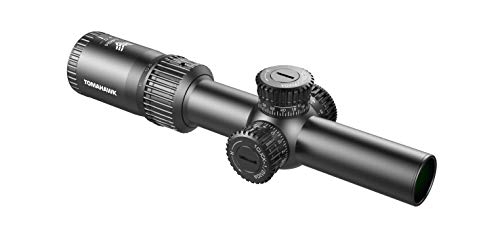
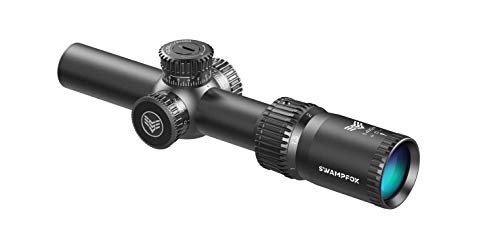
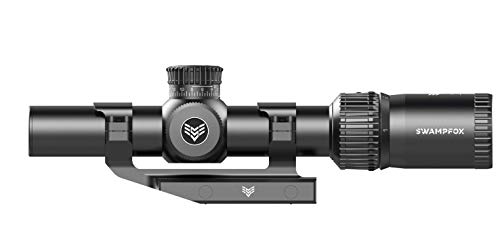
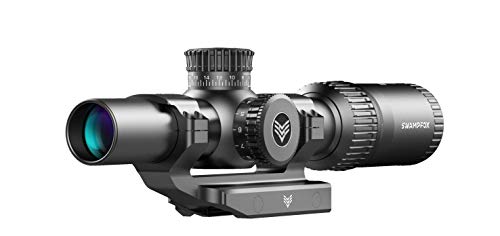
Swampfox Tomahawk LPVO
Rifle Scope Product Features
True 1x optical performance- no “fish eye”
Outstanding eye box for fast acquisition
Ultra bright and flat sight picture
Illuminated, etched SFP reticle
Fast focus adjustable ocular
DYNAMIC TACTICAL SHOOTING & 3-GUN
The affordably priced, highly versatile, crystal clear Low Powered Variable Optic you have been is here. Meet the Tomahawk.
RAPID TARGET ACQUISITION
Both the BDC and MOA illuminated etched reticles are designed to instantly acquire your target at short and medium range from a preset 50/200 yard battle sight zero.
CLOSE QUARTER BATTLE
With true 1x optical performance, this rifle scope and its reticles are designed to act like a red dot sight at short range. Keep both eyes wide open and maintain your focus on the target.
Long Range Precision
Crank up the magnification and have confidence in those long range shots with the Tomahawk’s ultra bright sight picture. Both illuminated, glass etched reticles incorporate ranging and long range holdover aiming cues.
SECOND FOCAL PLANE (SFP)
The larger reticle vs. the target size at lower magnifications afforded by the SFP is ideal for 3-Gun competition or tactical shooting, allowing you to find and hit those short range targets faster.
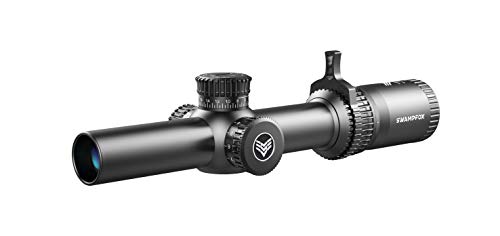
INCLUDED THROW LEVER
Because your holdovers are only accurate at the highest magnification, the included throw lever allows you to crank up or slam down the magnification in a split second.
BRIGHT AND CLEAR SIGHT PICTURE
The Tomahawk boasts edge to edge optical clarity throughout the entire magnification range.
TRUE 1X PERFORMANCE
Impressive true 1x magnification. An instant 1x sight picture gets you on target faster, without having to adjust your eyes’ focus.
QUALITY GLASS, PREMIUM COATINGS
Containing rare earth metals, the glass is optimized for maximum resolution and brightness. The lenses are fully multi-coated for maximum light transmission and anti-reflection, and sports extra specialty coatings for anti-fog, anti-scratch, and hydrophobic performance.
AN EYE BOX WITH LATITUDE
Everybody’s eyes are different. The fast focus adjustable ocular allows for micro adjustments to keep the reticle sharp at all times, whether illumination is on or off.
The optic system is a finely tuned machine, allowing for generous eye relief while maximizing field of view. You won’t get fatigued looking through this scope.
ZERO RESET TURRETS
Zero reset turrets provide more flexibility and just work better than most zero-lock turret systems. Zero the scope to your preferences and adjust your dial markings to mark your “zero’. Always know where your zero is without counting clicks. This system works great for shooters who prefer to dial for windage and elevation. For shooters using the reticle holdovers, set your zero and leave the turrets alone- and if the turret somehow gets bumped, simply dial it back to zero with a quick twist.
GLASS ETCHED ILLUMINATED RETICLES
The 11 position illumination turret provides crisp reticle contrast for both low light and bright daytime conditions.
TAKES A BEATING, HOLDS ZERO
Ever have that feeling that you need to treat your gun with kid’s gloves because you are worried about damaging the glass You can shed that mindset with Swampfox. The Tomahawk is shock resistant to 1,100 Gs of shock, waterproof, sand proof, and pretty much gorilla proof.
GUERRILLA DOT BDC
Calibrated for the AR platform with a 16″ barrel and using 5.56 NATO 55gr FMJ, this reticle does it all. It has a 1.3 MOA quick strike red dot, an 18″ outer circle for quicker strikes at short range, holdovers out to 600 yards, and ranging capabilities for plinker plates and humanoid target shoulders out to 500 yards.
GUERRILLA CROSS MOA
This reticle combines quick strike capabilities as well as standard MOA hash marks for windage and elevation adjustments. It features a center cross with a 0.5 MOA center aiming point at the cross intersection, and an 18″ outer illuminated circle. Use the red illumination markings for quick strike capabilities, and the black markings for standard MOA ranging and holdover calculations.
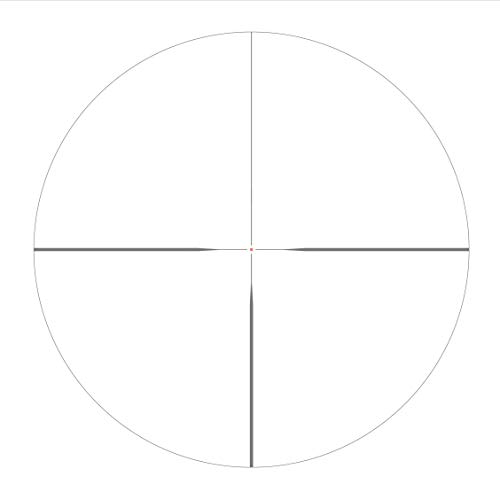
SPEAR DUPLEX
The Spear Duplex reticle is a simple, clean crosshair surrounding a center dot that can be illuminated in red. Fast and uncluttered, Spear Duplex offers no ranging, bullet drop compensation, or other advanced features. Zero in so that the center dot matches the point of impact at your preferred distance, and enjoy the simple, instinctive shooting experience.
Lens Specification Magnification: 1-4x; Objective Lens Diameter: 24 mm; Exit Pupil (mm): 5.9 @4Xmm (1X-4X)
Tube Diameter 30mm
Eye Relief (in) 3.7-3.8″ (1X-4X)
FOV @ 100 Yards (ft) 95.1-23.6′ (1X-4X)
Click Value 1/2 MOA
Parallax Setting 50 yds
Travel Per Rotation 60 Clicks/ 30 MOA
Elevation and Windage Max Elevation Adjustment: 100 MOA ; Max Windage Adjustment: 100 MOA
Lens Coating Fully Multi-Coated/ Anti-fog/Hydrophobic
Battery Side-mounted CR2032 Battery
Fast Focus Diopter Yes, -2 to +2
Illumination/reticle 11 Position Illumination turret ; BDC & MOA Glass Etched Illuminated
Turret Style Tactical Turrets with Zero Reset
Length/Weight 9.79”; 17.5oz
Waterproof Rating IPX7
Impact Resistance 1,100 G Forces
About the Swampfox Brand
Swampfox is a premium manufacturer for rifle scopes, optics, mounting solutions, and other accessories used for firearms like rifles and long guns. They style and make their mounts, scopes, and related products working with elements which are resilient and long lasting. This includes the Swampfox Tomahawk LPVO by Swampfox. For additional shooting goods, visit their website.
Information Rifle Optics
Rifle scopes enable you to specifically aim a rifle at various targets by lining up your eye with the target at range. They do this through magnifying the target by using a series of lenses within the scope. The scope’s alignment can be dialed in for consideration of separate ecological factors like wind speed and elevation decreases to account for bullet drop.
The scope’s function is to help the shooter understand exactly where the bullet will land based on the sight picture you are viewing with the scope as you align the scope’s crosshair or reticle with the target. Most modern-day rifle scopes have about eleven parts which are found inside and on the exterior of the optic. These scope parts include the rifle scope’s body, lenses, modification dials, focus rings, and other components. See all eleven parts of scopes.
Rifle Glass Varieties
Rifle scopes can be either “first focal plane” or “second focal plane” type of scopes. Choosing the optimal type of rifle scope is based around what type of shooting you plan on doing.
First Focal Plane Optics
First focal plane scopes (FFP) include the reticle ahead of the zoom lens. This induces the reticle to increase in size based on the level of zoom being used. The outcome is that the reticle measurements are the same at the enhanced distance as they are at the non magnified range. One tick on a mil-dot reticle at 100 yards with no “zoom” is still the identical tick at one hundred yards with 5x “zoom”. These types of scopes work for:
- Quick acquisition, far away types of shooting
- Shooting circumstances where estimations are small
- Experienced shooters who understand their aim point “hold over” and “lead” relationships for their firearm
- Shooters who do not mind the reticle is bigger and uses up more visual eyesight area than a SFP reticle
About Second Focal Plane Scopes
Second focal plane optics (SFP) include the reticle behind the magnification lens. This induces the reticle to stay at the exact same scale in connection with the quantity of magnification being used. The result is that the reticle measurements adjust based upon the magnification employed to shoot over longer ranges considering that the reticle measurements represent distinct increments which can vary with the magnification level. In the FFP illustration with the SFP glass, the 5x “zoom” 100 yard tick would be 1/5th of the non “zoom” tick measurement. These particular kinds of optics are beneficial for:
- Long distance styles of shooting where shooters have extra time to make ballistic computations
- Shooting where most of the shots take place within shorter distances and ranges
- Shooters who prefer a clearer optic sight picture without space taken up by the larger size FFP reticle
Magnification for Optics
The amount of magnification a scope supplies is identified by the size, density, and curvatures of the lenses inside of the rifle scope. The magnification of the scope is the “power” of the scope.
Fixed Power Lens Rifle Glass
A single power rifle scope and optic comes with a magnification number designator like 4×32. This implies the zoom power of the scope is 4x power and the objective lens is 32mm. The zoom of this kind of optic can not change since it is fixed.
Info on Adjustable Power Lens Optics
Variable power rifle scopes have adjustable power. These types of scopes will list the magnification amount in a configuration such as 2-10×32. These numbers mean the magnification of the scope could be set between 2x and 10x power. This also incorporates the power levels in-between 2 and 10. The power modification is accomplished by working with the power ring component of the scope near the rear of the scope by the eye bell piece.
Rifle Optic Power Level and Range Correlation
Here are some recommended scope powers and the ranges where they may be effectively used. Consider that high power optics and scopes will not be as practical as lower magnification level scope and optics since too much magnification can be a bad thing. The exact same idea relates to longer ranges where the shooter needs sufficient power to see precisely where to best aim the rifle.
Glass Lens Finishing
All modern rifle scope and optic lenses are layered. There are different types and qualities of glass coverings. Lens coating can be an important element of a rifle when looking at high end rifle optics and scope equipment. The glass lenses are among the most critical parts of the glass considering that they are what your eye sees through while sighting a rifle in on the point of impact. The finish on the lenses protects the lens surface and also helps with anti glare from refracted sunlight and color profiles.
HD Versus ED Lens Coatings
Some glass manufacturers also use “HD” or high-def lense coatings which take advantage of different processes, aspects, chemical substances, and polarizations to extract a wide range of color ranges and viewable target definition through the lens. This HD finish is frequently used with greater density glass which decreases light’s opportunity to refract by means of the lens glass. Some scope suppliers use “HD” to refer to “ED” suggesting extra-low dispersion glass. ED handles how colors are represented on the chroma spectrum and the chromatic aberration or deviance which is also called color distortion or fringing. Chromatic aberration can be visible around objects with hard edges and shapes as light hits the item from certain angles.
What to Know About Single Finish Versus Multi-Coating
Different optic lenses can likewise have various finishes applied to them. All lenses typically have at least some type of treatment or finishing applied to them before being used in a rifle scope or optic.
Single covered lenses have a treatment applied to them which is usually a protective and improving multi-purpose treatment. This lens treatment can protect the lens from scratches while reducing glare and other less useful things experienced in the shooting environment while sighting in with the optic. The quality of a single layered lens depends upon the scope maker and how much you spent on it. Both are indicators of the lens quality.
Some scope manufacturers similarly make it a point to specify if their optic lenses are layered or “multi” covered. Being “much better” depends on the maker’s lens treatment technology and the quality of materials used in building the rifle scope.
Anti-water Covering for Rifle Scopes
Water on an optic’s lens doesn’t support maintaining a clear sight picture through an optic in any way. Numerous top of the line or premium optic producers will coat their lenses with a hydrophobic or hydrophilic finish. The Steiner Optics Nano-Protection is a good example of this kind of treatment. It treats the exterior of the Steiner glass lens so the water particles can not bind to it or develop surface tension. The outcome is that the water beads slide off of the scope to maintain a clear, water free sight picture.
Optic Mounting Alternatives
Mounting solutions for scopes can be found in a couple of options. There are the standard scope rings which are separately installed to the optic and one-piece mounts which cradle the scope. These different types of mounts also generally are made in quick release variations which use manual levers which allow rifle operators to rapidly install and remove the glass.
Scope Mounts with Hex Key Rings
Basic, clamp-on type mounting scope rings use hex head screws to position to the flattop design Picatinny scope mounting rails on rifles. These varieties of scope mounts use two separate rings to support the scope, and are usually constructed from 7075 T6 billet aluminum or similar materials which are made for far away precision shooting. This form of scope mount is excellent for rifle systems which require a long lasting, unfailing mount which will not change regardless of just how much the scope is moved about or abuse the rifle takes. These are the design of mounts you should have for a devoted optics setup on a far away hunting or tournament long gun which will almost never need to be altered or recalibrated. Blue 242 Loctite threadlocker can additionally be used on the screws to protect against the hex screw threads from wiggling out after they are mounted tightly in position. An example of these mounting rings are the 30mm style from Vortex Optics. The set usually costs around $200 USD
Quick-Release Cantilever Rifle Glass Ring Mounting Solutions
These types of quick-release rifle scope mounts can be used to rapidly connect and detach a scope from a rifle before reattaching it to a different rifle. Several scopes can also be swapped out if they all use a compatible design mount. These types of mounts are convenient for rifle platforms which are transferred a lot, to swap out the optic from the rifle for protection, or for scopes which are used between multiple rifles or are situationally focused.
What to Know About Optic Tube Sealing and Gas Purging
Wetness inside your rifle glass can mess up a day of shooting and your highly-priced optic by causing fogging and making residue within the scope’s tube. Most scopes protect against humidity from entering the optical tube with a system of sealing O-rings which are water resistant. Typically, these water resistant optics can be submerged within 20 or 30 feet of water before the water pressure can force moisture past the O-rings. This should be sufficient wetness avoidance for conventional use rifles, unless you anticipate taking your rifle sailing and are worried about the optic still working if it goes overboard and you can still rescue the rifle.
Gas Purged Optic Tubes
Another part of avoiding the accumulation of moisture inside of the rifle optic tube is filling the tube with a gas like nitrogen. Given that this space is already taken up by the gas, the optic is less impacted by temp shifts and pressure variations from the external environment which might potentially allow water vapor to leak in around the seals to fill the void which would otherwise be there. These are good qualities of a decent rifle scope to look for.


