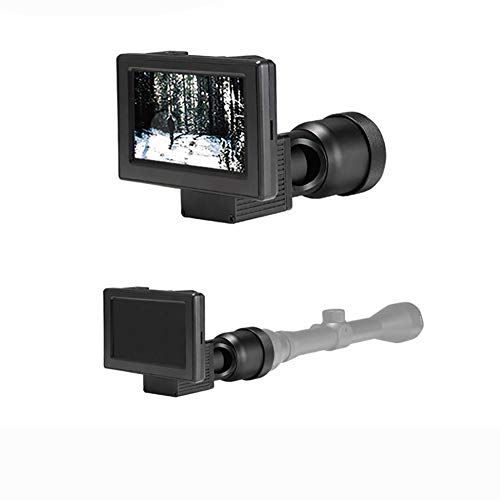
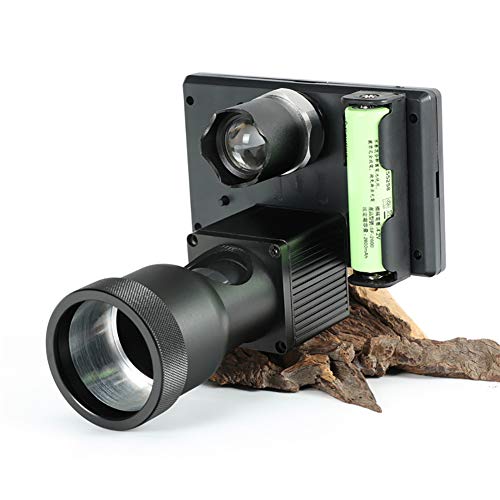
Description
Rifle Scope Product Details
MUJING Infrared LED IR Night Vision Riflescope Hunting Scopes Optics Sight Waterproof Hunting Camera Hunting Wildlife Night Visi
Specification:
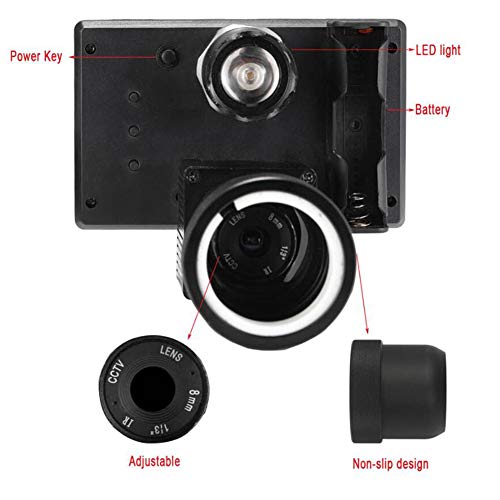
Lens:8mm
Luminous flux:f1.2
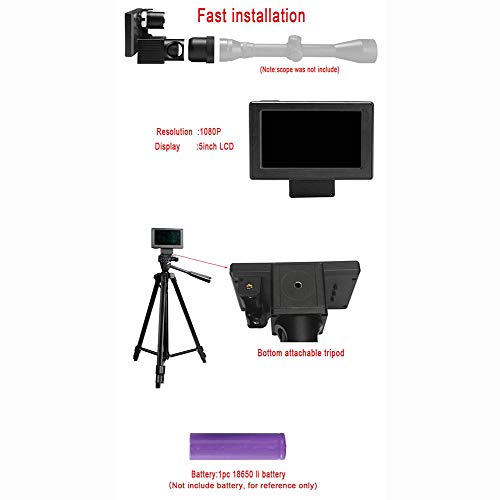
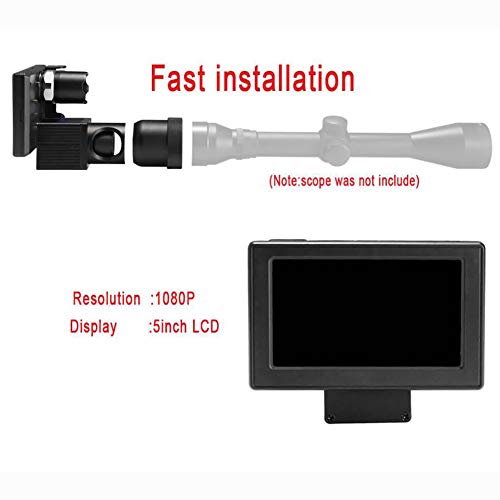
Display:5inch LCD
Resolution:1080P
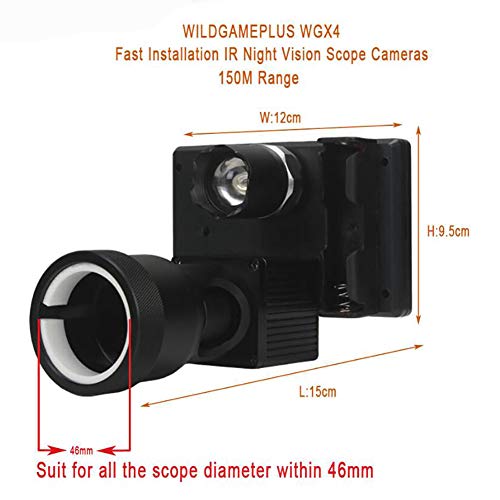
Range:150-200M in full dark
Core illuminance:0.01
Battery:1pc 18650 li battery.
Battery life:3 hours
Starting time:1 second
Working temperature:-30–60 degree
Material:Aluminium alloy and ABS
Color:Black
Waterproof:IP54
Video record:No
Picture:No
Dimension:180x120x80mm
Weight:0.24kg
Note:
turn off the torch each 10mins so that the torch body not too hot to burn
Application:
1)night vision scope
2)night vision riflescope
3)ir night vision scope
4)ir scope
5)hunting scope
6)hunting optical
7)hunting optics
8)infrared night vision
9)hunting night visoin
10)hunting riflescope
Rifle Scope Product Features
6x zoom,150m range in full dark.
Only for air guns
Fast installation
1080P Resolution,Adjustable Brightness.
Language:English/German/Spanish/Portuguese/Russian/Italian/Polish/turkey/Korean/Japanese
About the MUJING Company
MUJING is a premium manufacturer for long gun scopes, optics, mounting solutions, and other add-ons used for firearms like rifles and long guns. They create and supply their products by applying elements which are long lasting and resilient. This includes the MUJING Infrared LED IR Night Vision Riflescope Hunting Scopes Optics Sight Waterproof Hunting Camera Hunting Wildlife Night Visi by MUJING. For more shooting goods, visit their website.
Info Rifle Optics
Rifle scopes permit you to exactly align a rifle at different targets by lining up your eye with the target at range. They do this through zoom by utilizing a series of lenses inside the scope. The scope’s positioning can be adapted to take into account different ecological considerations like wind and elevation increases to account for bullet drop.
The scope’s purpose is to help shooters understand precisely where the bullet will hit based on the sight picture you are viewing using the optic as you line up the scope’s crosshair or reticle with the intended point of impact. A lot of contemporary rifle scopes and optics have about eleven parts which are found within and on the exterior of the scope. These parts include the rifle scope’s body, lenses, adjustment turrets, objective focus rings, and other parts. See all eleven parts of a scope.
About Rifle Glass Styles
Rifle scopes can be either “first focal plane” or “second focal plane” style of scopes. The form of focal plane an optic has identifies where the reticle or crosshair lies in regard to the scopes magnification. It literally means the reticle is behind or in front of the magnifying lens of the optic. Looking for the most desired sort of rifle glass is dependent on what type of hunting or shooting you plan on doing.
About First Focal Plane Scopes
Focal plane scopes (FFP) include the reticle in front of the magnification lens. These kinds of scopes are helpful for:
- Quick acquisition, far away types of shooting
- Shooting situations where calculations are minor
- Experienced shooters who know their target “hold over” and also “lead” ratios for their firearms
- Shooters who don’t mind the reticle is bigger and requires more visual sight room than a SFP reticle
Second Focal Plane Scopes
Second focal plane scopes (SFP) feature the reticle to the rear of the magnifying lens. This induces the reticle to remain at the same overall size relative to the quantity of magnification being used. The final result is that the reticle measurements alter based on the magnification chosen to shoot over lengthier distances due to the fact that the markings present various increments which change with the magnification level. In the FFP illustration with the SFP scope, the 5x “zoom” 100 yard tick measurement would be 1/5th of the non “zoom” tick. These varieties of scopes are beneficial for:
- Long distance forms of shooting where shooters have more time to make ballistic computations
- Shooting where most of the shots take place within shorter spaces and ranges
- Shooters who want a clearer optic sight picture without space taken up by the larger size FFP reticle
Magnification for Optics
The amount of zoom a scope offers is figured out by the diameter, density, and curvatures of the lenses inside of the rifle scope. The magnification of the scope is the “power” of the scope.
Fixed Single Power Lens Glass Info
A single power rifle scope will have a magnification number designator like 4×32. This suggests the zoom power of the scope is 4x power while the objective lens is 32mm. The magnification of this type of scope can not adjust considering that it is fixed.
Info on Adjustable Power Lens Glass
Variable power rifle scopes use variable power levels. The power adjustment is achieved by making use of the power ring part of the scope near the rear of the scope by the eye bell.
Power and Range
Here are some suggested scope powers and the distances where they may be effectively used. Always remember that high magnification optics will not be as practical as lower powered glass due to the fact that excessive magnification can be a bad thing. The exact same idea applies to longer distances where the shooter needs sufficient power to see precisely where to best aim the rifle.
About Rifle Scope Lens Covering
All contemporary rifle scope lenses are layered. There are various types and qualities of coverings. When thinking about high end rifle scope units, Lens finishing can be a significant component of defining the capability of the rifle. The lenses are among the most key parts of the glass as they are what your eye looks through while sighting a rifle in on the target. The covering on the lenses safeguards the lens surface area and even improves anti glare from refracted light and color perception.
ED Versus HD Optics
Some scope brands likewise use “HD” or high-definition lens coverings which use various processes, polarizations, elements, and chemicals to draw out a wide range of colors and viewable definition through the lens. Some scope manufacturers use “HD” to refer to “ED” to signify the lens has extra-low dispersion glass.
Single Finish Versus Multi-Coating for Rifle Optics
Various scope lenses can also have different coverings applied to them. All lenses generally have at least some type of treatment or covering applied to them before being used in a rifle scope or optic assembly. This is due to the fact that the lens isn’t just a raw piece of glass. It is part of the carefully tuned optic. It needs to have a coating placed on it so that the lens will be efficiently functional in many kinds of environments, degrees of sunshine (full light VS shaded), and other shooting conditions.
This lens treatment can offer protection to the lens from scratches while minimizing glare and other less beneficial things experienced in the shooting environment while sighting in with the scope. The quality of a single layered lens depends on the scope maker and how much you paid for it.
Some scope producers likewise make it a point to specify if their optic lenses are covered or “multi” covered. This suggests the lens has had several treatments applied to the surfaces. If a lens receives numerous treatments, it can establish that a manufacturer is taking numerous actions to fight different environmental aspects like an anti-glare finish, a scratch resistant anti-abrasion finish, followed by a hydrophilic finishing. This additionally does not necessarily mean the multi-coated lens is better than a single layered lens. Being “much better” is dependent on the manufacturer’s lens treatment techniques and the quality of components used in developing the rifle optic.
Hydrophobic Lens Finishes
Water on an optical lens does not assist with preserving a clear sight picture through a scope whatsoever. Many top of the line or premium optic producers will coat their lenses with a hydrophilic or hydrophobic finishing. The Steiner Optics Nano-Protection is a good example of this sort of treatment. It treats the exterior surfaces of the Steiner optic lens so the water particles can not bind to it or produce surface tension. The result is that the water beads move off of the scope to preserve a clear, water free sight picture.
Rifle Optic Installing Choices
Installing approaches for scopes are available in a couple of choices. There are the basic scope rings which are individually installed to the optic and one-piece mounts which cradle the scope. These different kinds of mounts also usually are made in quick release versions which use manual levers which enable rifle operators to rapidly mount and dismount the scope.
Hex Key Rifle Scope Rings
Normal, clamp style mounting scope rings use hex head screws to mount to the flattop style Picatinny scope installation rails on rifles. These types of scope mounts use two different rings to support the optic, and are made from 7075 T6 billet aluminum which are created for long range precision shooting. This type of scope install is great for rifles which require a resilient, sound mounting solution which will not move no matter how much the scope is moved or abuse the rifle takes.
Quick-Release Cantilever Glass Rings
These types of quick-release rifle scope mounts can be used to rapidly connect and detach a scope from a rifle before reattaching it to a different rifle. Numerous scopes can also be swapped out if they all use a similar style mount. These types of mounts are convenient for rifles which are transported a lot, to remove the optic from the rifle for protection, or for scopes which are used in between multiple rifles.
Sealing and Gas Purging for Rifle Scope Tubes
Moisture inside your rifle scope can ruin a day of shooting and your costly optic by bringing about fogging and producing residue inside of the scope tube. The majority of scopes avoid wetness from getting in the scope tube with a system of sealing O-rings which are waterproof.
Gas Purged Glass Tubes
Another component of preventing the accumulation of moisture within the rifle optic tube is filling the tube with a gas like nitrogen. Considering that this area is currently taken up by the gas, the glass is less impacted by temperature shifts and pressure distinctions from the outside environment which could potentially permit water vapor to seep in around the seals to fill the vacuum which would otherwise exist. These are good qualities of a decent rifle scope to seek out.


