

Description
Rifle Scope Product Details
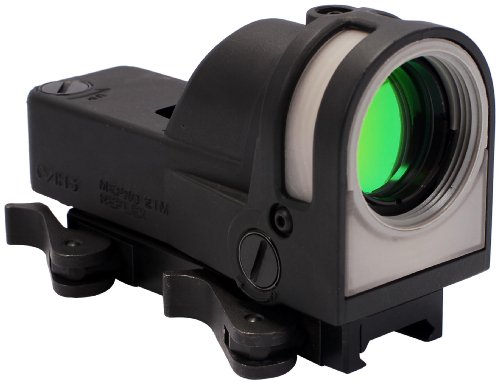
Meprolight ML62631 Mepro M21 5.5 Moa
Meprolight manufactures Electro-optical and Optical sights, Nightvision devices, Uncooled Thermal Weapon sights, Self-illuminated Night sights, Laser rangefinder, Handheld rangefinder, and Fire control systems. Meprolight products, being state-of-the-art, meet worldwide Military standards ” MIL-STD 810, MIL-STD 704, NATO standards and more.
Rifle Scope Product Features
Designed for and proven on the battlefield
Used and trusted by militaries, law enforcement, and professional shooters world-wide
Meprolight products are designed to provide fast and accurate target acquisition
Meprolight M21
Day / Night Illuminated Reflex Sight
The MEPRO M21 provides instant, all-light aiming capability, without batteries. Designed through close collaboration with Israeli Special Forces, the MEPRO M21 is battle proven, simple to use accurately and totally reliable.
MEPRO 21 offers a large 30mm diameter lens which allows rapid target acquisition with both eyes open. This was the first reflex sight in the world designed for close quarter combat, and it can be ordered with optional reticles ” dot, triangle, open-x and bullseye.
Illumination of the aiming point is achieved by a fiber optic collector system during the day, and by a miniature self-powered tritium light source at night. Transition between the two systems is instantaneous and automatic to assure good contrast between the aiming dot and the target area.
The MEPRO 21 reflex sight offers users the ability to acquire targets accurately at any range, in any situation, with both eyes open.
The MEPRO 21 is also designed to work in tandem with a magnifying scope like the MEPRO MX3 – mounted behind it for ultimate accuracy.
Advantages
– Always ready for action ” no batteries or switches.
– Aim & shoot faster than ever – with both eyes open!
– Self-illumination means always available.
– Operates under all weather and temperature conditions.
– Large 30mm diameter lens assures large FOV.
– Rapid target acquisition means quicker shooting in urban areas.
– Quicker shooting in urban areas and rapid target acquisition.
– Can be ordered with optional reticles ” dot, triangle, open-x and bullseye.
– Effective use of sight under extreme conditions such as bad weather, firing after physical stress and firing under pressure.
X Shape
Bullseye
Triangle
4.3 MOA OR 5.5 MOA
About the Meprolight Scope Maker
Meprolight is a premium producer for long gun scopes, optics, mounting solutions, and other add-ons used for firearms like rifles and long guns. They style and supply their scopes, mounts, and related products by using elements which are resilient and long lasting. This includes the Meprolight ML62631 Mepro M21 5.5 Moa by Meprolight. For more shooting products, visit their website.
Facts About Optics
Rifle scopes enable you to exactly align a rifle at various targets by aligning your eye with the target at range. They accomplish this through zoom using a set of lenses inside the scope. The scope’s positioning can be adjusted for the consideration of varied natural considerations like wind speed and elevation decreases to account for bullet drop.
The scope’s purpose is to understand precisely where the bullet will hit based on the sight picture you are seeing with the scope as you align the scope’s crosshair or reticle with the target. Many modern-day rifle scopes have around eleven parts which are located within and externally on the scope. These parts consist of the rifle scope’s body, lenses, elevation turrets, focus rings, and other parts. Learn about the eleven parts of rifle optics.
About Rifle Scope Types
Rifle scopes can be either “first focal plane” or “second focal plane” kind of scopes. The sort of focal plane a scope has establishes where the reticle or crosshair is located relative to the scopes magnifying adjustments. It literally means the reticle is behind or before the magnifying lens of the optic. Considering the most desired style of rifle scope is based upon what form of shooting you anticipate undertaking.
Info About First Focal Plane Optics
Focal plane scopes (FFP) come with the reticle in front of the magnifying lens. This causes the reticle to increase in size based on the extent of magnification being used. The benefit is that the reticle measurements are the same at the magnified range as they are at the non amplified range. For example, one tick on a mil-dot reticle at one hundred yards without “zoom” is still the same tick at 100 yards using 5x “zoom”. These types of scopes work for:
- Quick acquisition, long distance kinds of shooting
- Shooting circumstances where computations are low
- Experienced shooters who recognize their target “hold over” and also “lead” ratios for their firearms
- Shooters who do not mind the reticle is bigger and requires more visual sight space than a SFP reticle
About Second Focal Plane Optics
Second focal plane scopes (SFP) come with the reticle to the rear of the zoom lens. In the FFP example with the SFP scope, the 5x “zoom” one hundred yard tick measurement would be 1/5th of the non “zoom” tick measurement.
- Long distance forms of shooting where shooters have extra time to make ballistic computations
- Shooting where most shots occur within much shorter ranges and spaces
- Shooters who like a clearer optic sight picture with less space taken up by the larger size FFP reticle
Magnification for Rifle Glass
The quantity of scope magnification you need on your scope depends on the kind of shooting you intend to do. Nearly every style of rifle glass provides some degree of zoom. The quantity of zoom a scope gives is identified by the dimension, thickness, and curvatures of the lens glass within the rifle scope. The magnification level of the optic is the “power” of the scope. This implies what the shooter is looking at through the scope is magnified times the power element of what can generally be seen by human eyes.
Single Power Lens Optic Facts
A single power rifle scope will have a zoom number designator like 4×32. This indicates the magnification power of the scope is 4x power and the objective lens is 32mm. The zoom of this kind of optic can not adjust given that it is set from the factory.
Variable Power Lens Glass Details
Variable power rifle scopes use enhanced power. The power adjustment is handled by using the power ring part of the scope near the back of the scope by the eye bell.
Optic Power and Range Correlation
Here are some advised scope power settings and the ranges where they can be successfully used. Highly magnified rifle scope glass will not be as beneficial as lower magnification level rifle scope glass because too much zoom can be a bad thing. The exact same concept goes for longer distances where the shooter needs to have adequate power to see precisely where to properly aim the rifle at the target.
Scope Lens Coating
All contemporary rifle optic and scope lenses are layered. There are various types and qualities of coatings. When thinking about luxury rifle targeting units, Lens finishing can be a vital component of defining the rifle’s capability. The glass lenses are among the most important components of the scope considering they are what your eye sees through while sighting a rifle in on the point of impact. The coating on the lenses offers protection to the lens surface area and also helps with anti glare capabilities from refracted daylight and color perception.
HD Versus ED Glass Lens Coatings
Some rifle glass producers also use “HD” or high-definition lens coatings which employ different processes, elements, compounds, and polarizations to draw out separate colors and viewable definition through lenses. This HD finishing is frequently used with higher density glass which drops light’s capability to refract through the lens glass. Some scope manufacturers use “HD” to describe “ED” indicating extra-low dispersion glass. ED deals with how certain colors are represented on the chroma spectrum and the chromatic aberration or deviance which is similarly called color distortion or fringing. Chromatic aberration may be visible around things with defined outlines as light hits the object from various angles.
Scope Lens Single Finish Versus Multi-Coating
Various optic lenses can also have various coatings applied to them. All lenses generally have at least some kind of treatment or covering applied to them before they are used in a rifle scope or optic. This is because the lens isn’t just a raw piece of glass. It becomes part of the finely tuned optic. It must have a coating put on it so that the lens will be efficiently usable in many kinds of environments, degrees of sunlight (full light VS shade), and other shooting conditions.
Single covered lenses have a treatment applied to them which is normally a protective and boosting multi-purpose treatment. This lens treatment can protect the lens from scratches while minimizing glare and other less beneficial things experienced in the shooting environment while sighting in with the optic. The quality of a single layered lens depends on the scope developer and how much money you paid for it. The scope’s maker and cost are signs of the lens quality.
Some scope makers likewise make it a point to specify if their optic lenses are covered or “multi” covered. This indicates the lens has had multiple treatments applied to them. If a lens gets several treatments, it can show that a maker is taking multiple actions to fight different environmental factors like an anti-glare finish, a scratch resistant anti-abrasion covering, followed by a hydrophilic finishing. This also doesn’t always mean the multi-coated lens is much better than a single covered lens. Being “better” depends on the maker’s lens treatment solutions and the quality of glass used in constructing the rifle scope.
Anti-water Rifle Glass Lens Finish
Water on a lens does not help with preserving a clear sight picture through an optic at all. Numerous top of the line or premium scope producers will coat their lenses with a hydrophobic or hydrophilic coating. The Steiner Optics Nano-Protection is a good example of this kind of treatment. It deals with the exterior of the Steiner scope lens so the water particles can not bind to it or develop surface tension. The outcome is that the water beads sheet off of the scope to preserve a clear, water free sight picture.
Rifle Glass Installing Alternatives
Installing approaches for scopes come in a couple of choices. There are the standard scope rings which are individually installed to the scope and one-piece mounts which cradle the scope. These various types of mounts also normally can be found in quick release variations which use manual levers which enable rifle shooters to rapidly install and remove the scope.
Hex Key Scope Ring Mounting Solutions
Standard, clamp design mounting scope rings use hex head screws to mount to the flattop design Picatinny scope mount rails on rifles. These types of scope mounts use two different rings to support the optic, and are often made from 7075 T6 billet aluminum which are created for long range accuracy shooting. This type of scope install is perfect for rifles which need a durable, rock solid mount which will not move no matter how much the scope is moved or abuse the rifle takes.
Quick-Release Cantilever Optic Rings
These types of quick-release rifle scope mounts can be used to quickly take off a scope and attach it to a different rifle. Multiple scopes can even be swapped out if they all use a compatible style mount. These types of mounts are handy for rifles which are transported a lot, to swap out the optic from the rifle for protecting the scope, or for optics which are used between numerous rifles or are situationally focused.
Sealing and Gas Purging for Glass Tubes
Wetness inside your rifle optic can mess up a day on the range and your pricey optic by inducing fogging and generating residue within the scope tube. A lot of optics protect against moisture from going into the optical tube with a series of sealing O-rings which are water resistant. Typically, these water resistant optics can be submerged beneath 20 or 30 feet of water before the water pressure can push moisture past the O-rings. This should be ample moisture avoidance for conventional use rifles, unless you intend on taking your rifle on a boat and are concerned about the optic still functioning if it is submerged in water and you can still retrieve the firearm.
Gas Purged Optic Tubes
Another element of preventing the buildup of moisture within the rifle optic tube is filling the tube with a gas like nitrogen. Because this area is already occupied by the gas, the glass is less influenced by condition shifts and pressure distinctions from the outdoor environment which could possibly allow water vapor to permeate in around the seals to fill the vacuum which would otherwise be there. These are good qualities of a good rifle scope to seek out.


